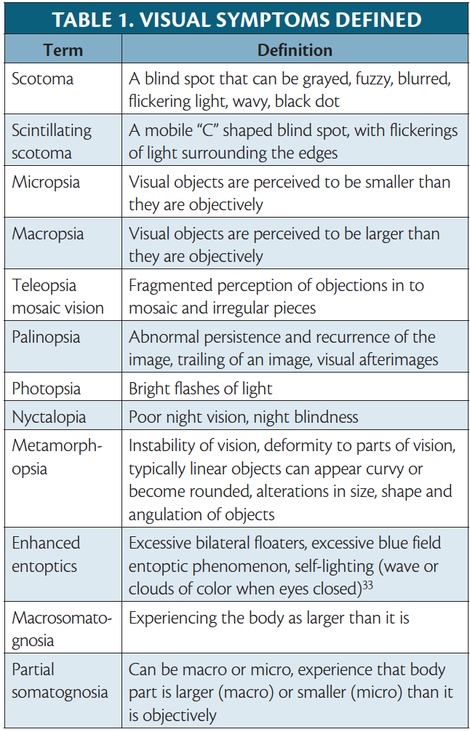
Scintillating scotoma is a visual aura that was first described by 19th-century physician Hubert Airy (1838–1903). Originating from the brain, it may precede a migraine headache, but can also occur without headache (also known as visual migraine). It is often confused with retinal migraine, which originates in the eyeball or socket.
Hubert Airy (June 14, 1838 – June 1, 1903) was an English physician who was the pioneer in the study of a migraine. He was the son of Sir George Airy, Astronomer Royal. He has two portraits in the National Portrait Gallery. Airy was one of the first to describe the common visual aura, which is the second stage in an outbreak of a migraine attack and precede a headache, and also coined the term scintillating scotoma for it.

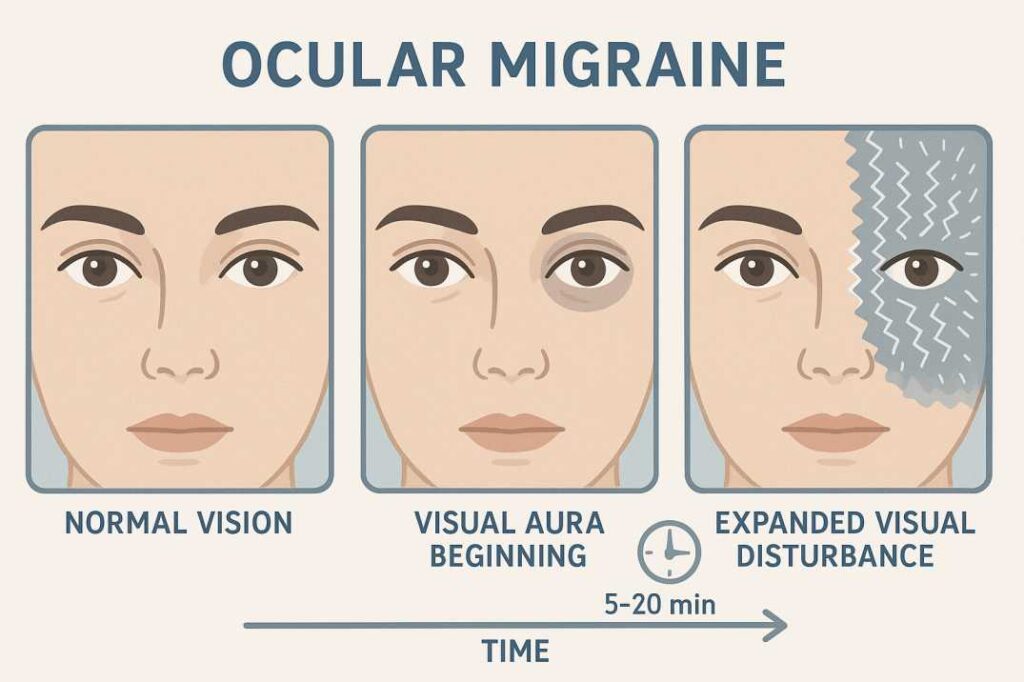
As the scotoma area expands, some people perceive only a bright flickering area that obstructs normal vision, while others describe seeing various patterns. Some describe seeing one or more shimmering arcs of white or colored flashing lights. An arc of light may gradually enlarge, become more obvious, and may take the form of a definite zigzag pattern, sometimes called a fortification spectrum (i.e. teichopsia, from Greek τεῖχος, town wall), because of its resemblance to the fortifications of a castle or fort seen from above. It also can resemble the dazzle camouflage patterns used on ships in World War I. Others describe patterns within the arc as resembling herringbone or Widmanstätten patterns.
The visual anomaly results from abnormal functioning of portions of the occipital cortex at the back of the brain, not in the eyes nor any component thereof, such as the retinas. This is a different disease from retinal migraine, which is monocular (only one eye).
It may be difficult to read and dangerous to drive a vehicle while the scotoma is present. Normal central vision may return several minutes before the scotoma disappears from peripheral vision.
Sufferers can keep a diary of dates on which the episodes occur to show to their physician, plus a small sketch of the anomaly, which may vary between episodes.
Scintillating Scotoma
Scintillating scotomas are usually visual auras associated with migraines. These temporary blind spots are often characterized by flickering lights or geometric patterns and can precede or accompany a migraine headache.
Paracentral Scotoma
Paracentral scotomas occur near the center of one’s vision and are often linked to glaucoma, which damages the optic nerve due to increased pressure in the eye. Early detection and treatment are crucial to prevent significant vision loss.
Junctional Scotoma
Junctional scotomas involve a combination of a central scotoma in one eye and a superior or inferior nasal step defect in the other. This type is typically associated with lesions at the junction of the optic nerve and chiasm, such as in cases of tumors or aneurysms.
What causes a scintillating scotoma in only one eye?
A scintillating scotoma may affect one or both of your eyes. It's a blind spot that flickers and wavers between light and dark. They're typically not permanent but could indicate an underlying health condition. A scotoma is an aura or blind spot that obstructs part of your vision.
How to get rid of a visual migraine aura?
The visual aura is often resolved by the time the headache occurs, does not cause any permanent vision damage and is typically not the target of treatment. The treatment options vary from over-the-counter analgesics (pain medication) to migraine-specific prescribed medications such as the triptan class of medications.
Scotomas, or blind spots in the eye, can result from a variety of conditions affecting the retina or optic nerve. The causes vary depending on the type of scotoma. Here’s a breakdown of common causes for different types of scotomas:
Causes of Central Scotomas
- Macular Degeneration: Deterioration of the central portion of the retina, leading to a loss of central vision. Learn more about macular degeneration.
- Diabetic Retinopathy: Damage to the blood vessels in the retina due to diabetes. More on diabetic retinopathy.
Causes of Junctional Scotomas
- Optic Nerve Disorders: Issues at the junction of the optic nerve and chiasm, possibly due to tumors or aneurysms.
- Trauma or Inflammation: Injury or swelling in the area can affect the optic nerve function.
Causes of Paracentral Scotomas
- Glaucoma: Increased pressure in the eye leading to optic nerve damage. Glaucoma details.
- Diabetic Eye Conditions: Diabetes can cause various eye problems, including scotomas. Diabetic eye care information.
Causes of Scintillating Scotomas
- Migraines: Visual auras associated with migraines often manifest as scintillating scotomas.
- Vascular Issues: Blood flow problems to the brain or retina can cause temporary scotoma.
The treatment of scotomas varies based on their underlying cause. While some types are treatable, others may only be manageable. Common treatment methods include:
- Corrective Lenses: For scotomas caused by refractive errors, prescription eyeglasses or contact lenses can help.
- Medication: Certain drugs can treat underlying conditions like migraines or autoimmune diseases that cause scotomas.
- Laser Therapy: Used in cases like diabetic retinopathy to reduce the risk of vision loss.
- Surgery: In some cases, surgical intervention might be necessary, especially for scotomas caused by eye injuries or tumors.
- Vision Therapy: Helps in adapting to the scotoma and improving visual function.
Reference:
- discovervision.com/blog/scotoma-blind-spot-in-eye
- en.wikipedia.org/wiki/Scintillating_scotoma
 وبلاگ تخصصی عینک شامل مجموعه مطالب پزشکی است که اطلاعات مفیدی در رابطه با عینک , چشم، لنز، سلامتی چشم و راه های پیشگیری از بیماریهای چشمی، کنترل و درمان آن را در اختیار شما کاربر محترم می گزارد.

