ابزار وبمستر

Eye injuries in the workplace are very common. The National Institute for Occupational Safety and Health (NIOSH) reports about 2,000 U.S. workers sustain job-related eye injuries that require medical treatment each day. However, safety experts and eye doctors believe the right eye protection could have lessened the severity or even prevented 90% of these eye injuries.

Common eye injuries occurring at work can result from chemicals or foreign objects in the eye and cuts or scrapes on the cornea. Other causes of injuries include splashes with grease and oil, burns from steam, ultraviolet or infrared radiation exposure, and flying wood or metal chips.
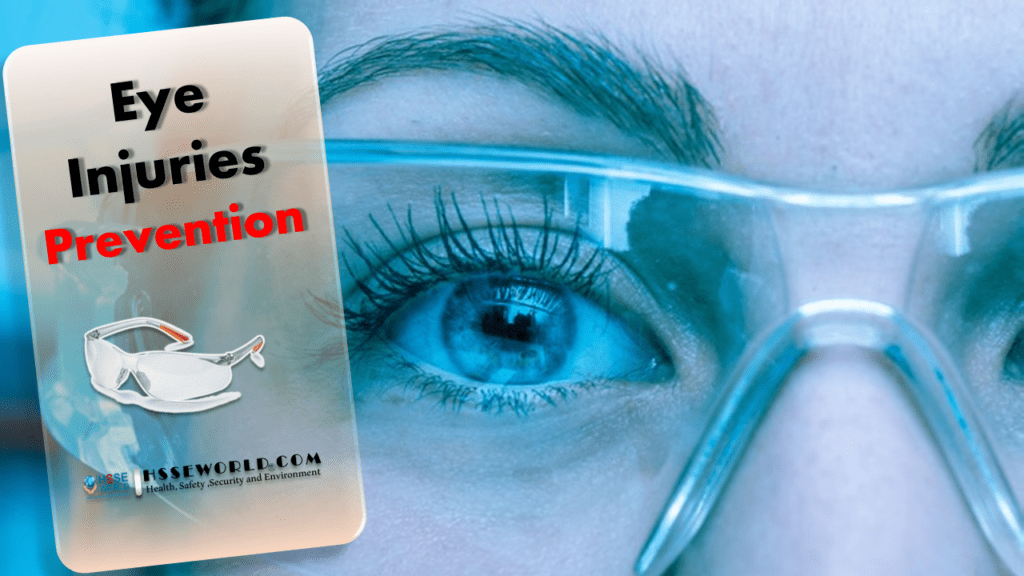
In addition, health care workers, laboratory and janitorial staff, and other workers may be at risk of acquiring infectious diseases from eye exposure. Some infectious diseases can be transmitted through the mucous membranes of the eye as a result of direct exposure to blood splashes, respiratory droplets generated during coughing, or from touching the eyes with contaminated fingers or other objects.

Two major reasons workers experience eye injuries on the job are because they were:

  1. Not wearing eye protection, or

  2. Wearing the wrong kind of protection for the job.

The Occupational Safety and Health Administration (OSHA) requires the use of eye and face protection whenever there is a reasonable probability of injury that could be prevented by such equipment. Personal protective eyewear, such as goggles, face shields, safety glasses, or full face respirators must be used when an eye hazard exists. The eye protection chosen for specific work situations depends upon the type of hazard, the circumstances of exposure, other protective equipment used, and individual vision needs.

There are four things you can do to protect your eyes from injury:

  1. Know the eye safety dangers at your work.
  2. Eliminate hazards before starting work by using machine guards, work screens or other engineering controls.
  3. Use proper eye protection.
  4. Keep your safety eyewear in good condition and have it replaced if it becomes damaged. eResearch by Navid Ajamin -- spring 2013
Reference: aoa.org/eye-protection.xml
Workplace Eye Safety

Why is eye safety at work important?


Eye injuries in the workplace are very common. More than 2,000 people injure their eyes at work each day. About 1 in 10 injuries require one or more missed workdays to recover from. Of the total amount of work-related injuries, 10-20 % will cause temporary or permanent vision loss.

Experts believe that the right eye protection could have lessened the severity or even prevented 90% of eye injuries in accidents.

What are the common causes of eye injuries?


Common causes for eye injuries are:

  • Flying objects (bits of metal, glass)

  • Tools

  • Particles

  • Chemicals

  • Harmful radiation

  • Any combination of these or other hazards

What is my best defense against an eye injury?
There are three things you can do to help prevent an eye injury

  • Know the eye safety dangers at work-complete an eye hazard assessment

  • Eliminate hazards before starting work. Use machine guarding, work screens, or other engineering controls)

  • Use proper eye protection.

When should I protect my eyes at work?

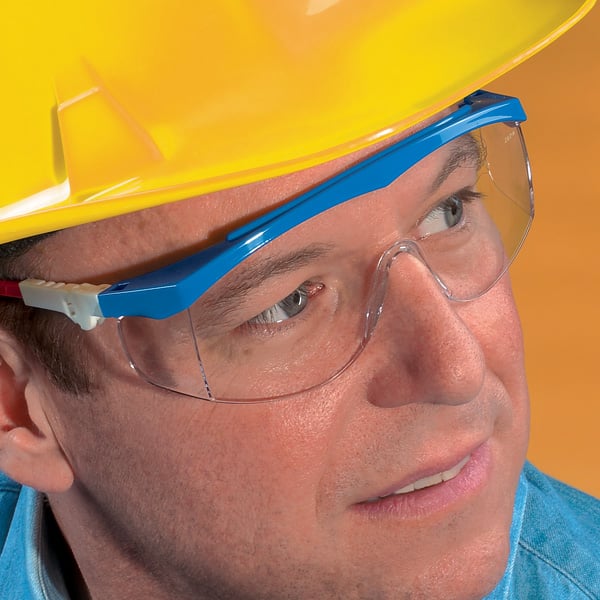
You should wear safety eyewear whenever there is a chance of eye injury. Anyone working in or passing through areas that pose eye hazards should wear protective eyewear.

What type of safety eyewear is available to me?
Safety eyewear protection includes:

  • Non-prescription and prescription safety glasses

  • Goggles

  • Face shields

  • Welding helmets

  • Full-face respirators

What type of safety eye protection should I wear?

安全メガネを着用してください


The type of safety eye protection you should wear depends on the hazards in your workplace. If you are working in an area that has particles, flying objects, or dust, you must at least wear safety glasses with side protection (side shields). If you are working with chemicals, you should wear goggles. If you are working near hazardous radiation (welding, lasers, or fiber optics) you must use special-purpose safety glasses, goggles, face shields, or helmets designed for that task.

What is the difference between glass, plastic, and polycarbonate safety lenses?
All three types of safety lenses meet or exceed the requirements for protecting your eyes.

Glass lenses

  • Are not easily scratched

  • Can be used around harsh chemicals

  • Can be made in your corrective prescription

  • Are sometimes heavy and uncomfortable

Plastic lenses

  • Are lighter weight

  • Protect against welding splatter

  • Are not likely to fog

  • Are not as scratch-resistant as glass

Polycarbonate lenses

  • Are lightweight

  • Protect against welding splatter

  • Are not likely to fog

  • Are stronger than glass and plastic

  • Are more impact resistant than glass or plastic

  • Are not as scratch resistant as glass

Reference: preventblindness.org/safety/worksafe.html -- Prevent Blindness America

Goggles or safety glasses are forms of protective eyewear that usually enclose or protect the area surrounding the eye in order to prevent particulates, water or chemicals from striking the eyes. They are used in chemistry laboratories and in woodworking. They are often used in snow sports as well, and in swimming. Goggles are often worn when using power tools such as drills or chainsaws to prevent flying particles from damaging the eyes. Many types of goggles are available as prescription goggles for those with vision problems.

The requirements for goggles varies depending on the use. Some examples:

  • Cold weather: Most modern cold-weather goggles have two layers of lens to prevent the interior from becoming "foggy". With only a single lens, the interior water vapor condenses onto the lens because the lens is colder than the vapor, although anti-fog agents can be used. The reasoning behind dual layer lens is that the inner lens will be warm while the outer lens will be cold. As long as the temperature of the inner lens is close to that of the interior water vapor, the vapor should not condense. However, if water vapor gets between the layers of the lens, condensation can occur between the lenses and is almost impossible to get rid of; thus, properly constructed and maintained dual-layer lenses should be air-tight to prevent water vapor from getting in between the lenses.

  • Swimming: Must be watertight to prevent water, such as salt water when swimming in the ocean, or chlorinated water when swimming in a pool, from irritating the eyes or blurring vision. Allows swimmers to see clearly underwater. They will not be usable more than a few feet underwater, because the water pressure will press them tightly against the face. Examples of these include the Swedish goggles. 

  • Power tools: Must be made of an unbreakable material that prevents chunks of metal, wood, plastic, concrete, and so on from hitting or piercing the eye. Usually has some sort of ventilation to prevent sweat from building up inside the goggles and fogging the surface.

  • Blowtorch goggles: These protect the eyes from glare and flying sparks and hot metal splashes while using or near as blowtorch. They arenot the correct filters for arc welding.

  • Welding goggles: Includes all goggles for eye protection during welding or cutting. They provide protection against debris, the heat from welding, and, with the proper filters, the optical radiation resulting from the welding, which can otherwise cause arc eye.

  • Motorcycle riding and other open-air activities: Prevents insects, dust, and so on from hitting the eyes. 

  • Laboratory and research: Combines impact resistance with side shields to prevent chemical splashes' reaching the eyes. May also include laser protection which would be covered by EN 207 (Europe) and ANSI Z 136 (United States). Examples of these include red adaptation goggles.

  • Racquetball: Protect the eyes from racquets swinging in an enclosed area and from impact from hard rubber ball.

  • Winter sports: Protect the eyes from glare and from icy particles flying up from the ground.

  • Astronomy and meteorology: dark adaptor goggles are used before going outside at night, in order to help the eyes adapt to the dark.

  • Basketball: Several NBA players have worn goggles during play, including Kareem Abdul-Jabbar, James Worthy, Horace Grant, Kurt Rambis and Amar'e Stoudemire; they prevent a fellow player from scratching or hitting the eyes when trying to grab the basketball.

  • Aviation: In open cockpit aircraft, such as old biplanes, aviators, such as Amelia Earhart and Charles Kingsford Smith, would wear goggles to help protect from the wind and are still in use today. Examples of these include the AN-6530 goggles.

  • Virtual reality: A virtual reality headset, sometimes called "goggles", is a wrap-around visual interface to display computer output. Commonly the computer display information is presented as a three-dimensional representation of real-world environments. eResearch by Navid Ajamin -- spring 2009 

Reference: en.wikipedia.org/wiki/Goggles

Most of us, as children, remember being told never to run with our pencils in our hand (or any other kind of pointed object). This was because there was a fear that we could fall down, the pencil would jab our eyes, and our vision would be impaired. Thus, the warning for safety of our eyes. But as adults, we need to do much more than this, to protect our eyes. Safety eyewear is an essential factor in eye safety and eye protection.

Who Needs Safety Eyewear

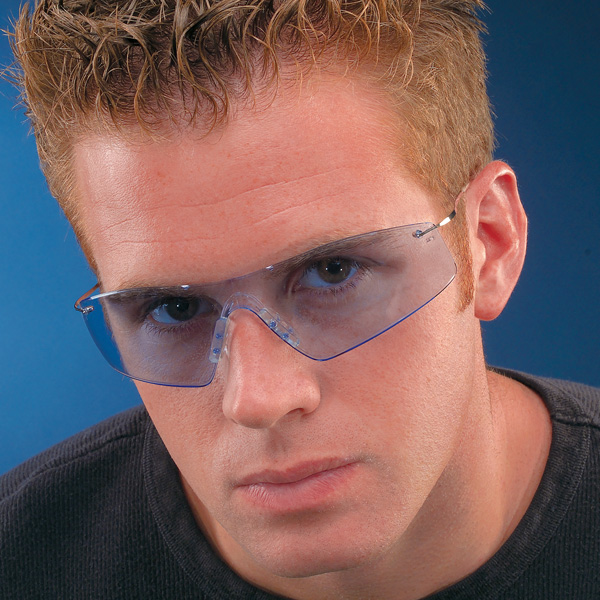
Anyone who works with power tools, lathes, saws, axes, or any kind of welding material, either in the home or at work, needs to wear safety eyeglasses for eye safety. Safety eyewear will keep your eyes protected from small flyaway particles of wood, dust, and other materials, which tend to be a hazard while working with any kind of tools.

Features Of Safety Eyeglasses

  • Safety eye wear is not the same as regular eye glasses. The frames are much thicker and stronger and the lenses of safety eyeglasses are also much stronger than those of regular dress eyeglasses.

  • The American National Standards Institute (ANSI) is an organization that sets standards for manufacturing of products. The ANSI has also set standards for safety eyewear. The lenses in safety eye glasses should be impact resistant and be able to pass what is known as a ‘drop-ball’ test. In this test, a ball is dropped onto the lens of safety eyeglasses from a considerable distance. If the lens can withstand this impact, then it is fit for being used in safety eyewear. If the lens shatters, cracks, or breaks, then it cannot be used for safety glasses.

  • Frames of safety glasses are heat resistant and prevent the lens to be pushed into the eyes of the wearer.

  • Most safety eye glasses are made from plastic polycarbonate lenses. These are much more durable, stronger, and more impact resistant than lenses of regular eyewear.

  • Safety eyewear should be of the right fit. It should not only cover your eyes fully, but also fit perfectly so as to cover the tops and sides of your eyes.

Safety eyeglasses usually have the markings of the manufacturer on the lens, frames, and removable eye shields. These markings can help distinguish a pair of safety eye glasses from other eyeglasses, and also determines whether the eyeglasses pass the standards for safety eyewear.

Benefits Of Safety Eye Wear

  • Safety eye wear can keep small particles of wood from entering your eyes, if you work a lot with saws and axes. This is very important as the wood particles can tear the epithelium in your eye and cause permanent eye damage.

  • Safety glasses are beneficial to people who use welding instruments, as they are heat resistant and protect the eyes from sparks and flames.

  • It protects your eyes from chemical splashes, if you work with harmful chemicals.

  • So, if you work with any kind of equipment that may be hazardous to your eye safety, always remember to wear a pair of safety glasses.

Reference: all-about-eyeglasses.com

nicetoview.blogfa.com
عینک eyewear وبلاگ تخصصی عینک شامل مجموعه مطالب پزشکی است که اطلاعات مفیدی در رابطه با عینک , چشم، لنز، سلامتی چشم و راه های پیشگیری از بیماریهای چشمی، کنترل و درمان آن را در اختیار شما کاربر محترم می گزارد.

Always Be Healthy
همیشه سلامت باشید

Navid Ajamin نوید عجمین
eMail: navid.aj@outlook.com
موضوعات وب
پیوندها

unicef for every child

شمارنده