ابزار وبمستر

Photochromic lenses are lenses that darken on exposure to ultraviolet (UV)radiation. Once the UV is removed (for example by walking indoors), the lenses will gradually return to their clear state.

fow·tow·krow·muhk photochromic /ˌfəʊtə(ʊ)ˈkrəʊmɪk/
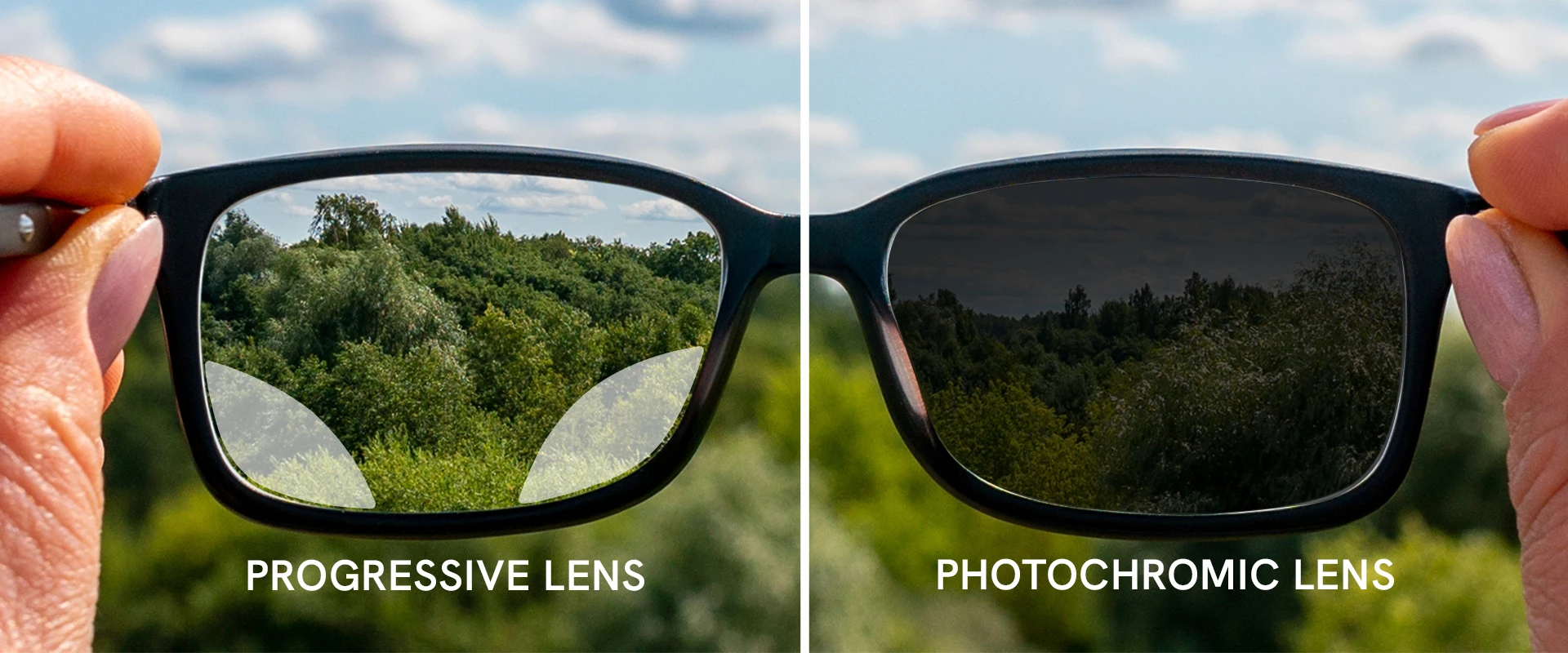
Photochromic lenses may be made of glass,polycarbonate, or another plastic.

Photochromic lenses are eyeglass lenses that are clear (or nearly clear) indoors and darken automatically when exposed to sunlight. Other terms sometimes used for photochromic lenses include "light-adaptive lenses," "light intelligent" and "variable tint lenses." [6]

Are photochromic lenses good for eyes?

One of the key advantages of photochromic glasses is their 100% protection against harmful UVA and UVB rays. This built-in UV protection helps prevent long-term eye damage, such as cataracts, photokeratitis, and skin damage.

Manufacturers create photochromic lenses from various materials, with plastic being the most common in modern eyewear.

The base lens material is typically one of the following: [5]

  1. Polycarbonate: A popular choice due to its impact resistance and lightweight properties.
  2. High-index plastic: Offers a thinner profile for higher prescriptions.
  3. Trivex: Combines impact resistance with excellent optical clarity.
  4. CR-39 plastic: A standard plastic lens material with good optical qualities.

The photochromic molecules are then incorporated into these base materials using different methods

Early photochromic glasses were usually made of glass and contained small crystals of silver halides (e.g., silver chloride) that darkened when exposed to light, just like old photographic films.

The glass version of this type of lenses was first developed by Corning in the 1960s. More recently, plastic versions of these lenses have been commercialized. The first of these was the Photolite lens sold in the early 1980s by American Optical Corporation, but the first commercially successful plastic photochromic lens was introduced by Transitions Optical in 1991. [1]
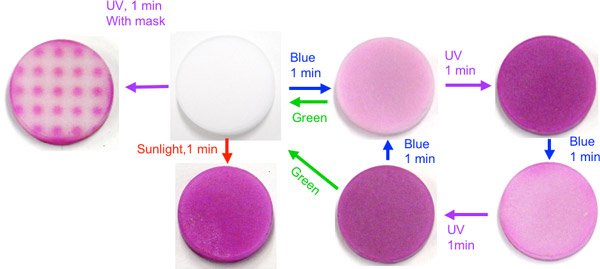
Figure 1

Notice how the molecule on the left gets rearranged when exposed to UV light (Photo Credit : American Chemical Society Publication)

Photochromic properties of iron-added BaMgSiO4 -- aist.go.jp

However, unlike those films, the darkening of photochromic lenses was reversible, i.e., the lenses became clear again once the ambient light was lowered. The crystals used in the glass of such lenses were minuscule, both in number and size. Fewer than 0.1% of silver halide crystals, which were 100 times thinner than a human hair, were used in early photochromic glasses.

Modern photochromic glasses, however, are usually made of plastic, rather than glass, and contain carbon-based (organic) molecules instead of silver compounds. Such compounds are better, more efficient alternatives for achieving the quick-darkening and quick-clearing effect, as their molecular structure varies in accordance with the presence/absence of a certain type of light (usually ultraviolet light, as it’s a component of sunlight).

The most commonly used photochromic molecules are naphthopyrans and oxanes, due to their ability to change their molecular structure reversibly upon exposure to UV light.

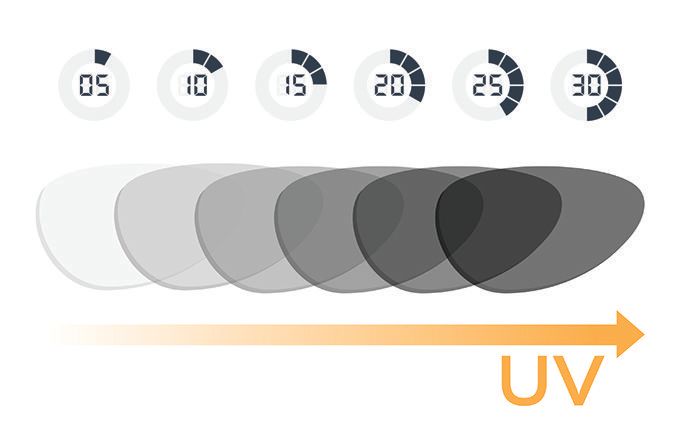
Intensity in different conditions

Who should wear photochromic lenses? [5]

Photochromic lenses are suitable for a wide range of users, including:

  • People who frequently transition between indoor and outdoor environments.
  • Individuals sensitive to light or prone to eye strain, including presbyopes.
  • Those who want convenient UV protection without carrying multiple pairs of glasses.
  • People who engage in outdoor activities but don't want to switch between regular glasses and sunglasses.
  • Children and teenagers, as their eyes are more susceptible to UV damage.

Photochromic lenses, such as Transitions®, quickly adapt to changing light conditions. The lenses darken in outdoor light, reducing glare and providing 100% UV protection, then quickly become clear again when you're inside, giving you comfortable vision, both indoors and out.[2]

Transitions is actually a brand name of a Photocromic Lens. Although transitions are probably the most advanced photochromic lens on the market there are many others out there.

People call Photochromic lenses by all different kinds of names such as Transitions, Reactolite, Reactions and I've even heard them called Graduations. However, they are all Photo chromic lenses.

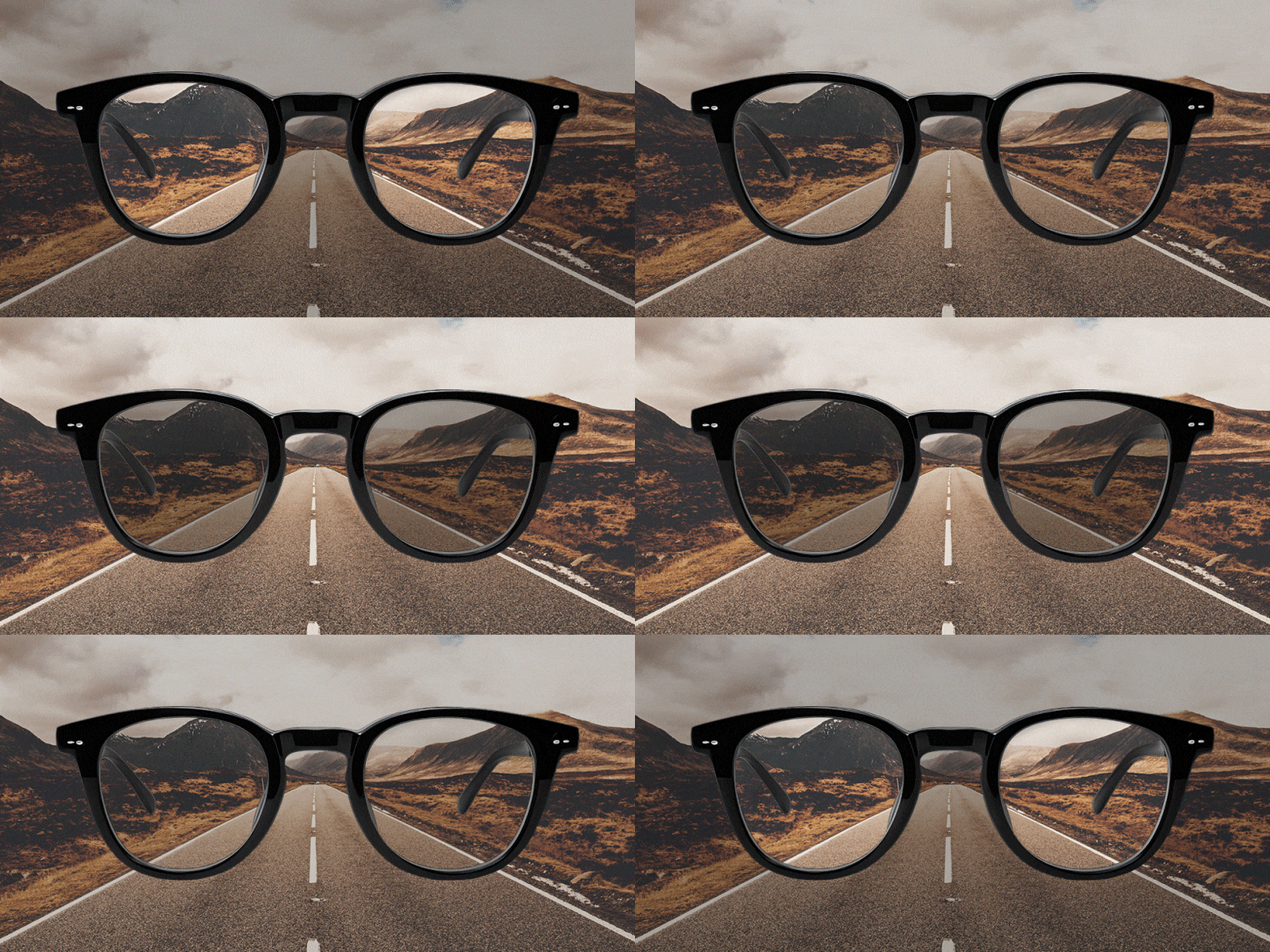
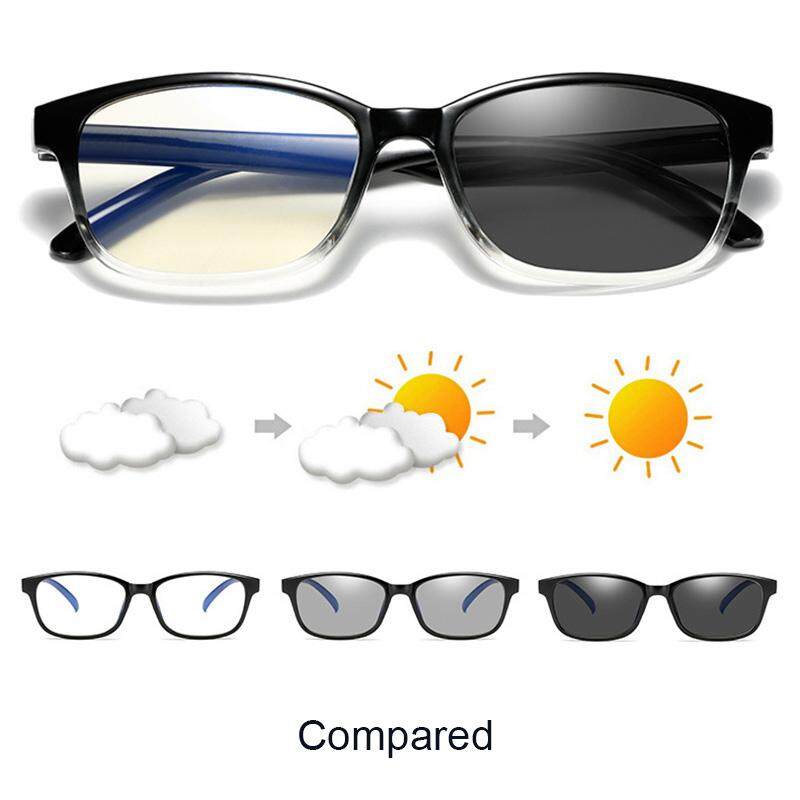
Photochromic lenses are clear lenses that react with UV and produce a tint effect based on the amount of UV present.

When wearing Photochromic lenses even a dull day some reaction will occur producing a very pale tint and then on a very bright day where more UV is present they will turn quite dark. When wearing them indoors they will become clear. eResearch by Navid Ajamin -- spring 2011

The idea behind photochromic lenses is that they will provide the correct amount of protection for the varying light conditions you experience. However, when driving, your car windscreen will block a certain amount of UV which is required to make the lens react so they will not work as well as they would outside of the car.

The Two Most Common Photocromic Lenses
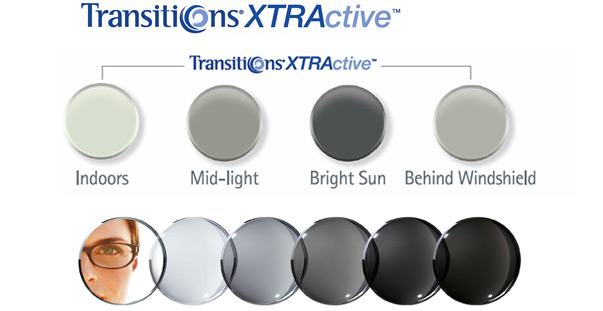
Transitions Lenses

Transitions are available in Standard Plastic, Poly Carbonate, 1.6 and 1.67 Lenses. They are the fastest reacting lens on the market and will react into sunglasses within 30 seconds. However, they will take longer than that to go clear again when you go inside.
Related image

Reactolite Lenses

Reactolite is a brand name given to a Glass photochromic lens. They do not react as well as the transitions and are much heavier to wear. However, one good thing about glass reactolite is that they work much better behind a car windscreen than the transitions do. (If only we could have the best of both worlds.)

In most cases the Transitions lens is the preferred option due to the over all comfort and performance.

Photocromic lenses are ideal in the sense that they can save you having to purchase two pairs of glasses ie, Clear glasses and a pair of Sunglasses. However, many people who wear transitions also have a cheaper tinted pair just to use in the car.[3]

Reference:

  1. en.wikipedia.org/wiki/Photochromic_lens
  2. chappleopticians.com/pages/glasses/lens-options.php
  3. ezinearticles.com/?Pros-and-Cons-Of-Photochromic-Lenses&id=891841
  4. scienceabc.com/innovation/how-do-photochromic-photochromatic-glasses-work.html
  5. iotlenses.com/blog/what-are-photochromic-lenses-and-their-benefits.html
  6. allaboutvision.com/lenses/photochromic.htm

See also:

  • Photochromic lenses explainthatstuff.com
  • How Do Photochromic (Photochromatic) Glasses Work? scienceabc.com
  • The History and Future of Smart Photochromic Technology transitions.com

Photochromic lenses are the tint changing lenses in eyeglasses that darken when exposed to UV rays from the sun. With the many brands and styles available, these lenses combine fashion with comfort and offer protection from the damaging effects of UV radiation and glare while at the same time enhancing patients' quality of vision.

Why Photochromic
One of the problems facing those who wear corrective eyewear is how to protect their eyes from the glare of the sun. Not only is bright sunlight difficult to see in, excessive exposure to ultraviolet radiation can cause permanent damage to the cornea and conjunctiva of the eye.

Before the introduction of photochromic lenses, patients were forced to purchase a set of eyeglasses for indoor wear as well as a set of prescription sunglasses for outdoor wear, often having to carry both and switch when traveling from inside to outside.

Thanks to photochromic lenses, eyeglass wearers can now purchase one set of glasses that will allow them to see inside, as well as reduce the glare of the sun when outdoors.

Disadvantages of Photochromic Lenses

  • Photochromic lenses get darken when coming in contact with the sunlight, blocking your windshields. Therefore, they are risky to wear while driving.
  • These lenses are also affected by the weather. This means that it takes more time to get dark in the winters.
  • Some photochromic lenses are not polarized, leading to harsh glares of sunlight. Therefore, make sure you ask the doctor about all the details of the glasses that you wear.

How Do Photochromic Lenses Work?

Regular sunglasses block out only a particular amount of wavelengths of light with polarization. But the photochromic lenses are carbon-based therefore, the molecules present in the lenses react to the UV, this leads to the change in shape as the lenses absorb the light and it seems to look darker. The darkness of the lens depends on the amount of light present, the brighter the light the darker the lenses. The darkening of the lens takes up to 30 seconds and it can take 2-5 minutes to get back to normal when an individual goes back to an indoor area.

As photochromic lenses protect our eyes from harmful UV rays, therefore, they are considered a safe option to keep our eyes healthy. These lenses are either made up of plastic, glass, or polycarbonate. Different kind of lens is prescribed to different people depending on the difficulties faced by them.

Who Should Use Photochromic Lenses?

Photochromic lenses can be worn throughout the day on the daily basis. They can be used just like normal eyeglasses. These lenses are beneficial to all and especially to those who continuously change from outdoors to indoors.

These lenses are highly recommended for children as they tend to spend much time playing outdoors, therefore it keeps their eyes safe from the sunlight.

How To Choose Photochromic Lenses?

Consult an eye care professional as he/she will guide and tell you all about the glasses which are prescribed to you. They will also help you to find the best eyeglasses that will work according to the requirement of your eyes. Consulting them might take some of your time from your busy schedule but it will surely lead to you being happier with the outcome.

These lenses are also known as “transitional lenses” as it adapts itself depending on the lighting conditions. It gets darken when exposed to bright light, protecting our eyes from harmful UV rays. There are certain benefits of using photochromic lenses over normal sunglasses as it adapts itself depending on the light conditions and you don’t need to carry multiple lenses with you. It has the property of both the normal lenses as well as the polarized lenses. But everything has its limits. These lenses are not safe to wear while driving as it blocks the windshields. These lenses are also affected by the weather which is again not a very good sign for eyeglasses.

Make sure you consult a doctor before choosing any lenses for yourself. As they will guide you about what is better for your eyes.

Advantages of Photochromic Lenses

  • Helps in reducing eye strain and eye damage by blocking up to 100% harmful UVA/ UVB light.
  • These glasses are very convenient to carry as you do not need different glasses for different lighting conditions.
  • These lenses also protect our eyes from the high risk of cataracts by blocking out as much light as possible.
  • Photochromic lenses are cost-effective. It has the feature of both the lenses (normal lens and sunglasses).
  • These lenses are available in different shades, tints, and styles suitable for your taste.

Are photochromic lenses suitable for driving?
Answer: Photochromic lenses work in UV light, which most car windscreens block out. As a result, they tend not to react as quickly in a car as they would normally. Tinted glasses, lenses or visors should not be worn at night or in poor visibility, but are fine to use in good driving conditions.

What is the difference between photochromic and transition lenses?
Photochromic or "adaptive" lenses darken when exposed to UV light, such as when you walk outdoors. When you are no longer exposed to the effects of UV, (i.e. walk indoors), the lenses return to their clear state. Transitions lenses are photochromic lenses that block 100% of harmful UVA and UVB rays.

Photochromic eyeglass lenses, also known as Transitions™ lenses, are lenses that change colour based on the amount of UV light they are exposed to. They are a popular choice for people who wear glasses and want to have both prescription lenses and sunglasses in one pair of glasses. However, like any product, there are pros and cons to using photochromic lenses.

Pros of Photochromic Lenses

  • Convenience. One of the most significant advantages of photochromic lenses is their convenience. They can adjust to different lighting conditions, which means that you don't have to switch between regular glasses and sunglasses. This is especially beneficial for people who spend a lot of time outdoors, such as hikers or joggers.
  • Protection. Photochromic lenses are designed to protect your eyes from harmful UV rays. This is important because exposure to UV rays can cause serious eye damage, including cataracts and macular degeneration. Photochromic lenses can block up to 100% of UV rays, which can help prevent these conditions.
  • Style. Photochromic lenses are available in a wide range of styles, including prescription lenses, bifocal lenses, and progressive lenses. This means that you can get the right type of lens for your specific needs and preferences. Additionally, photochromic lenses are available in a range of colors, including gray, brown, and green.
  • Cost-Effective. While photochromic lenses may cost more than regular lenses, they can be cost-effective in the long run. Instead of having to purchase two separate pairs of glasses (one with prescription lenses and one with sunglasses), you only need one pair. This can save you money over time.

Cons of Photochromic Lenses

  • Activation Time. One of the most significant drawbacks of photochromic lenses is the amount of time it takes for them to activate. Depending on the brand and model, it can take up to several minutes for the lenses to darken in bright sunlight. This means that you may have to wait before you can comfortably see in bright sunlight.
  • Temperature Sensitivity. Photochromic lenses can also be sensitive to temperature. In very cold weather, the lenses may not darken as much as they would in warm weather. This can be problematic for people who live in cold climates or who spend a lot of time outdoors in the winter.
  • Limited Tint Range. While photochromic lenses are available in a range of colors, the tint range is limited compared to traditional sunglasses. This means that they may not be suitable for people who need a very dark tint to protect their eyes in bright sunlight.
  • Replacement Cost. Photochromic lenses are more expensive than traditional lenses, which means that they can be costly to replace if they get scratched or damaged. Additionally, some insurance plans may not cover the cost of replacing photochromic lenses.

Reference:

  • catalogs.com
  • eyemantra.in/eyeglasses/photochromic-lenses
  • luxyin.com/blogs/shopping-tips/quick-know-about-photochromic-lenses
  • eye-deology.com/fyeyes/photochromic-lenses-pros-and-cons

See also: How do photochromics work? - Transitions Lenses

nicetoview.blogfa.com
عینک eyewear وبلاگ تخصصی عینک شامل مجموعه مطالب پزشکی است که اطلاعات مفیدی در رابطه با عینک , چشم، لنز، سلامتی چشم و راه های پیشگیری از بیماریهای چشمی، کنترل و درمان آن را در اختیار شما کاربر محترم می گزارد.

Always Be Healthy
همیشه سلامت باشید

Navid Ajamin نوید عجمین
eMail: navid.aj@outlook.com
موضوعات وب
پیوندها

unicef for every child

شمارنده