A 5-Minute Safety Training Aid
You are driving on a dark twolane road. An on coming vehicle’s high beams suddenly appear. The vehicle flashes past and for the next few seconds, you’re blind. You’ve just experienced a common hazard known as night blindness.
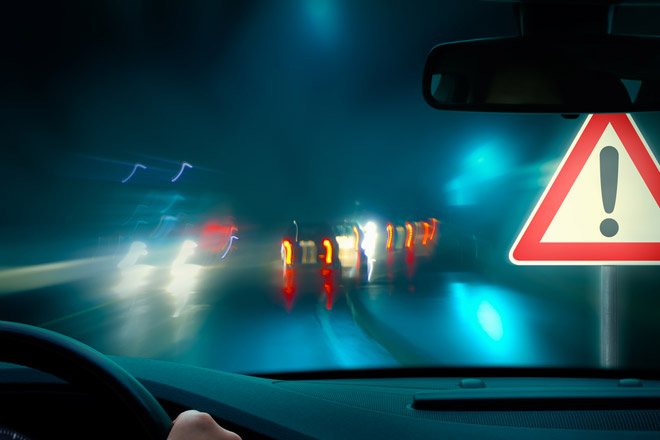
Night blindness occurs when the eye is accustomed to low levels of light and the light intensity
suddenly rises. The eyes adjust to the new light level by contracting the pupils, but if that level of intensity is only momentary, then the eyes have to readjust to the lower level again by dilating the pupil.
While the eyes make these adjustments, there are several seconds that the vision is impaired.
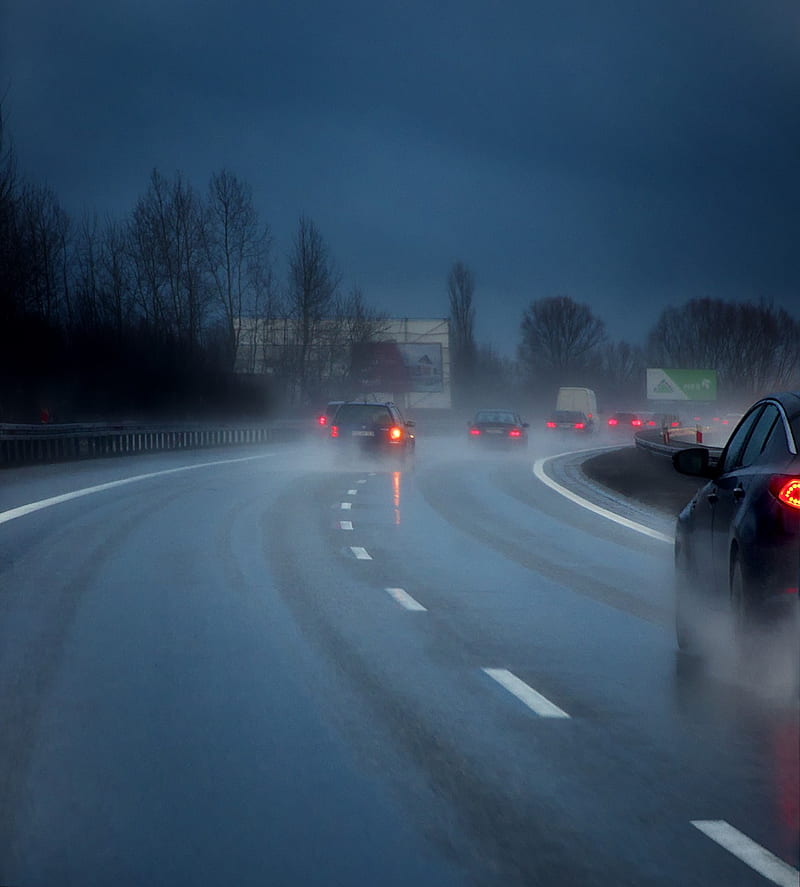
During the day about 85 percent of the information we need to drive is visual, but at night this changes. Without enough light, we lose much of our contrast sensitivity (the ability to distinguish objects from the background) and peripheral vision (the ability to recognize objects at the edges of our visual field).

At night, headlights limit our visual range to the area they illuminate, only 250 to 350 feet of the road ahead.
At sixty miles per hour a car will cover 350 feet in four seconds. Therefore, slower driving speeds will allow you more time to spot a hazard and respond in a crisis.
With this in mind, pedestrians should wear light-colored clothing or put reflective tape on their clothes to make themselves more visible in the darkness.
If a driver turns his or her head from side to side, it will help make up for the lost side vision that occurs at night.
Also, if the driver must wear glasses to drive, frames that have thin sidepieces should be selected, since wide sidepieces will hinder side vision.
In addition to the problems listed above, there is the fact that as we age the lenses of our eyes become yellowed and we need more light to see. Most of us begin to notice this in our 40’s. By the age of 65 we need 2.5 times the light that we needed when we were 20 to see the same level of detail. For this reason, older persons should drive slower when they find it necessary to drive at night. Whatever your age, precautions must be taken to avoid accidents.


The following traffic safety do's and don’ts may help.
Do eResearch by Navid Ajamin -- spring 2013
+ Drive within the range of your headlights, not by what you think you see beyond your headlights.• + Adjust your rear view mirror to the “night” setting to dim headlight glare coming from behind. When the glare is gone, readjust to the “day” setting.
+ Focus your eyes on the right edge of the pavement to avoid being blinded by oncoming headlights.• + Clean your headlights.
+ Clean your windshield (inside and out).
+ Keep your eyes moving between the road and the rear and side-view mirrors.
+ Use your high beams when you can.• Take off sunglasses at dusk.
+ Turn your head from side to side to increase your peripheral vision.
+ Dim your instrument lights to reduce brightness when you look at them.
Don’t
• Drive faster than sixty-five miles per hour at night, slower on winding roads.• Put dark aftermarket tinting film on windows and windshields.
• Depend on fog or parking lights when driving at dusk or dawn.• Keep your high beams on when another vehicle approaches.
• Exceed the speed for driving conditions at night in rain, snow or fog.• Turn your interior lights on while driving your vehicle.
• Wear sunglasses at night.• Stare into your side-view mirrors as cars pass from behind.
• Use any type of medication that may change your night vision or cause drowsiness.[1]
Night blindness doesn’t mean you are completely unable to see at night, but that your vision is poorer then. It is not a disease in itself, but instead is a symptom of some other type of vision problem.
In some cases, being very nearsighted (myopic) can make it hard to see at night or in low light.
Certain cells in the eye’s retina are responsible for allowing you to see in dim light. If these cells are affected by a disease or condition, night blindness occurs.
Some of the eye conditions that can cause night blindness include:
- Nearsightedness (seeing well up close but not far away)
- Glaucoma (a disease of the optic nerve connecting the eye to the brain)
- Medicine for glaucoma that constricts (narrows) the pupil
- Cataracts (cloudiness of the eye’s naturally clear lens)
- Diabetes (uncontrolled blood sugar levels)
- Retinitis pigmentosa (an eye disease that causes blindness)
- Too little Vitamin A
- Keratoconus (having a cornea that is very steeply curved)
Is bumping and tripping through your darkened house normal or a symptom of something else?
If you aren’t sure whether you have night blindness, consider the following questions:
- Do you find yourself having trouble moving around your house at night, even with small night lights?
- Is driving at night becoming more difficult?
- Do you avoid going outside at night for fear of tripping?
- Do you have trouble recognizing people’s faces in darkened settings?
- Does it take your eyes a long time to adjust to light when coming in from the darkness?
- Similarly, does it take you a long time to adjust to seeing anything in a darkened room?
If you have any concerns about your ability to see in the dark or in dim light, speak with your ophthalmologist right away. Having a complete eye exam will help identify any condition affecting your vision.
Treating night blindness depends solely on its cause. If your refractive error is significant, getting a new prescription for your eyeglasses may be all you need for better vision in low light. In some cases, having cataracts removed can be illuminating as far as your vision is concerned. Your ophthalmologist can explain what is causing your night blindness and suggest how to brighten your outlook.[2]
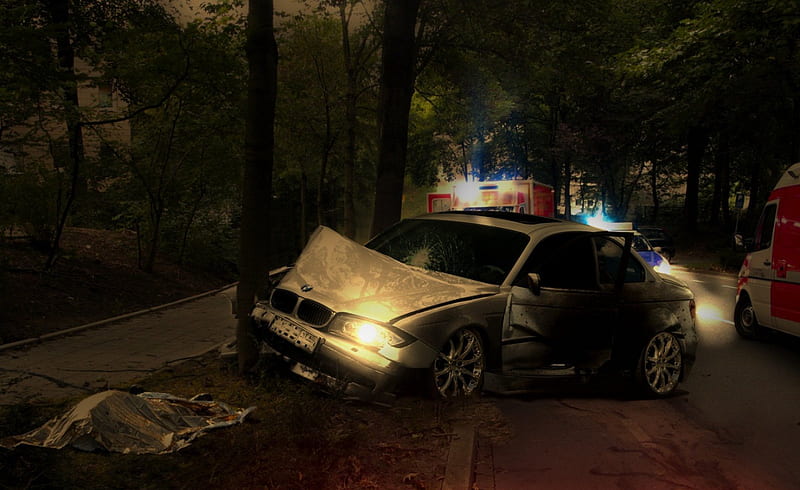
Humans are not designed to be creatures of the night, so remember to respect the road and the darkness.

The Fédération Internationale de l'Automobile (FIA) created the Golden Rules for Road Safety as guidelines for drivers to keep themselves and other road users safer in transit. To start: Check your vision regularly, protect your eyes from glare and always wear your glasses on the road. The FIA also advises that motorists: [3]
- Always pay attention
- Obey the speed limit
- Buckle up
- Use a child safety seat
- Check their tyres
- Don't text and drive
- Stay bright in reflective gear
- Wear a helmet
- Stop when they're tired
- Watch out for pedestrians, especially kids
- Slow down for kids
- Never drink and drive
Reference:
- tdi.texas.gov
- aao.org/eye-health/news/shedding-light-on-night-blindness
- essilor.com/ie-en/blog/your-life-and-your-eyes/cannot-see-when-driving-at-night

 وبلاگ تخصصی عینک شامل مجموعه مطالب پزشکی است که اطلاعات مفیدی در رابطه با عینک , چشم، لنز، سلامتی چشم و راه های پیشگیری از بیماریهای چشمی، کنترل و درمان آن را در اختیار شما کاربر محترم می گزارد.
