What is the difference between keratoconus and keratoglobus topography?
Keratoglobus is a special corneal thinning disease that differs from keratoconus in one important way: instead of a single point of thinning of the cornea (which results in a bulging and the development of a cone), the cornea in people with keratoglobus is thin everywhere in topography.
How common is keratoglobus?
Keratoglobus is a very rare condition that causes corneal thinning primarily at the edges of the cornea.
The distinction between the 2 similar conditions was first made by Cavara in 1950. The cornea in keratoglobus is diffusely thinned, often more markedly in the peripheral cornea, whereas in keratoconus the thinning is most prominent in the central cornea.
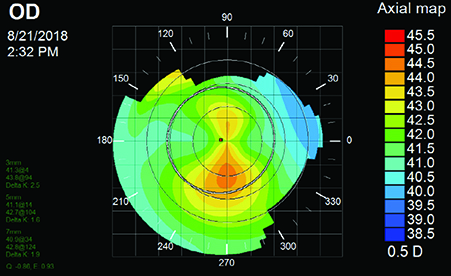
What is early keratoconus?
With keratoconus, the cornea thins and bulges into an irregular cone shape, resulting in vision loss. Keratoconus generally begins at puberty and progresses into the mid-30s. There is no way to predict how quickly the disease will progress, or if it will progress at all.
What are the risk factors for keratoglobus?
Keratoglobus is thought to be caused by a structural weakness in the cornea, leading to a gradual thinning and bulging of the cornea over time. This weakening may be due to a variety of factors, including genetic predisposition, collagen disorders, or excessive eye rubbing.
Is keratoglobus progressive?
Keratoglobus is a bilateral condition that is usually present at birth. It is usually minimally progressive. Keratoglobus has been associated with systemic connective tissue disorders such as Ehlers-Danlos syndrome, Marfan syndrome, and Rubenstein-Taybi Syndrome.
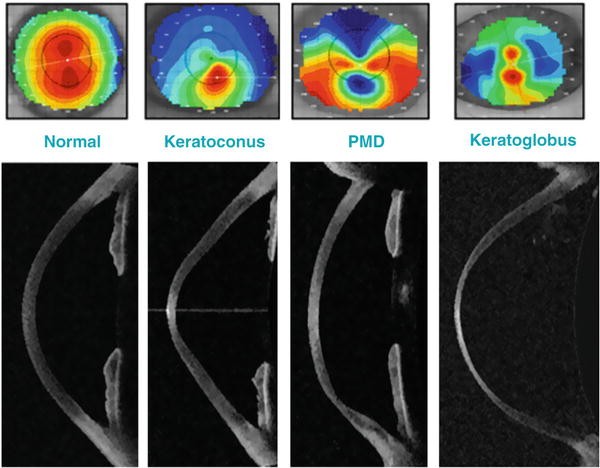
Understanding the Distinctions Between Keratoconus and Keratoglobus.
Two conditions that often confuse people due to their similarity in names and symptoms are keratoconus and keratoglobus. While both conditions affect the cornea, they have distinct features and require different approaches for diagnosis and management.
- Definition and Prevalence: Keratoconus is a relatively common eye disorder where the cornea, the transparent front layer of the eye, thins and bulges into a cone shape. It affects approximately 1 in 84 individuals and usually begins during adolescence or early adulthood. On the other hand, keratoglobus is a rarer condition characterized by a more generalized thinning and globular protrusion of the cornea. Although it is less prevalent than keratoconus, its exact occurrence is not well-documented due to its scarcity.
- Corneal Shape: The primary distinction between the two conditions lies in the shape of the cornea. In keratoconus, the cornea thins and protrudes asymmetrically in a cone shape, leading to distorted and blurred vision. This irregular curvature causes light to scatter as it enters the eye, resulting in visual impairment. Conversely, keratoglobus induces a more uniform thinning of the cornea, causing it to bulge outward like a globe. This results in a more significant visual distortion than keratoconus and may even lead to high myopia and astigmatism.
- Progression and Age of Onset: Keratoconus typically begins in the teenage years or early adulthood and may progress over a span of 10 to 20 years before stabilizing. In some cases, the cornea's cone shape may remain relatively stable for prolonged periods. Keratoglobus, on the other hand, tends to manifest at a younger age, often during infancy or early childhood. Its progression is usually slower and may stabilize in early adulthood.
- Treatment Options: The treatment approaches for keratoconus and keratoglobus are similar in some aspects but may differ based on the severity and progression of each condition. In the early stages of keratoconus and mild keratoglobus, eyeglasses or soft contact lenses might help correct vision. As the conditions progress, specilaised hard contact lenses are often prescribed to provide better visual acuity by compensating for the irregular corneal shape.
For both conditions, collagen cross-linking, CAIRS and other minimally invasive keratoconus surgery (MIKS) and other traditional types of corneal transplantation may be used. Topography guided laser treatments are usually not applicable for keratoglobus.
In conclusion, while keratoconus and keratoglobus both impact the cornea and cause visual disturbances, they are distinct conditions with varying characteristics and management strategies. Early diagnosis and appropriate treatment can significantly improve the quality of life for individuals affected by these conditions, emphasizing the importance of regular eye check-ups and timely intervention.
Reference:
- drbrendancronin.com.au/blog/z3gpu0uyvy4ear1px1pyi2dyjksgn1
- link.springer.com/rwe/10.1007/978-3-540-69000-9_931
- reviewofoptometry.com
 وبلاگ تخصصی عینک شامل مجموعه مطالب پزشکی است که اطلاعات مفیدی در رابطه با عینک , چشم، لنز، سلامتی چشم و راه های پیشگیری از بیماریهای چشمی، کنترل و درمان آن را در اختیار شما کاربر محترم می گزارد.
