The orbicularis oculi is an orbital muscle of facial expression. It plays a key role in closing the eyelids and thus protecting the cornea from damage. Attachments – Originates from the medial orbital margin, the medial palpebral ligament, and the lacrimal bone.
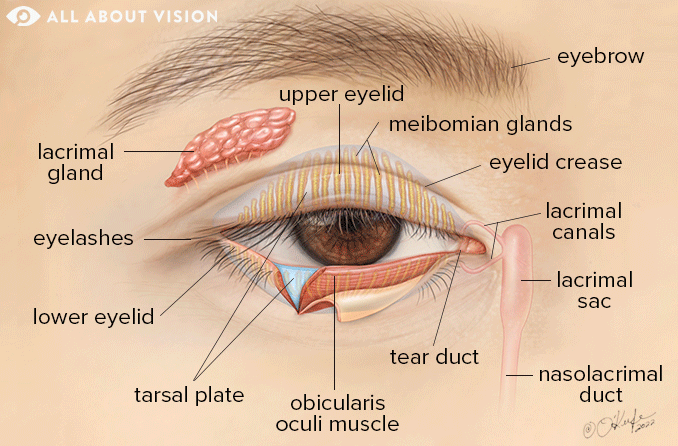
- Attachments – Originates from the medial orbital margin, the medial palpebral ligament, and the lacrimal bone. It inserts onto the skin around the margin of the orbit as well as the tarsal plates of the eyelid.
- Actions:
- Palpebral part – gently closes the eyelids.
- Lacrimal part – involved in the drainage of tears.
- Orbital part – tightly closes the eyelids.
- Innervation – Temporal and zygomatic branches of the facial nerve.
- Blood supply – Branches of the maxillary, superficial temporal, facial and ophthalmic arteries.

What does the orbicularis oculi muscle do?
The orbicularis oculi is a sphincter-like muscle that overlies the orbital rim and eyelids, and functions to close the upper and lower lids. It is separated into an orbital and palpebral segment.
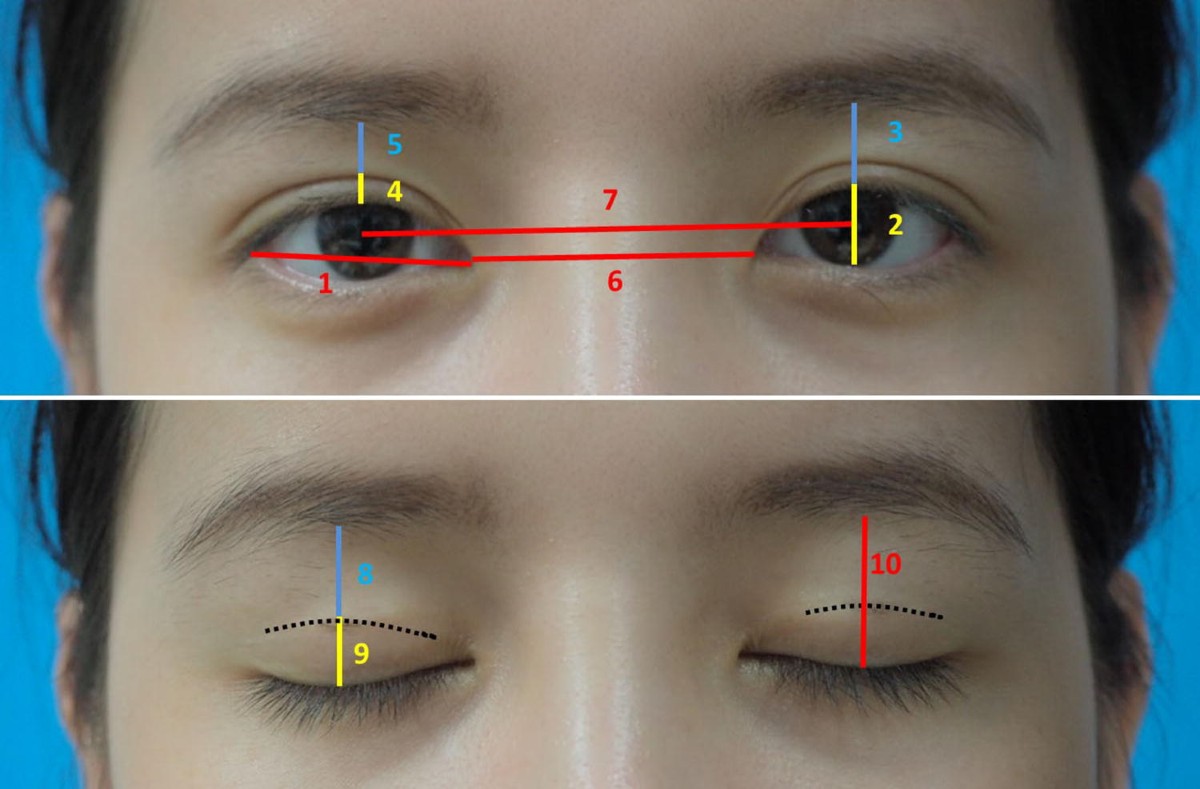
The orbicularis oculi muscle closes the eye and supports the lower eyelid. When a significant part of the orbicularis oculi muscle in the upper eyelid is lost, function can be near normal. In contrast, a similar major defect in the lower eyelid requires reconstruction to prevent ectropion. This is performed with a flap that may include the orbicularis oculi muscle.
With electromyographic studies, Lowry et al. have shown that the orbicularis oculi muscle transferred as a bipedicled flap to the lower eyelid remains active.
If the lower eyelid remains positioned too low, one may insert a tendon (e.g., palmaris longus tendon) or fascial strip while fixing its edges at the medial and lateral canthus that serves as a hammock.
What is the eyelid crease?
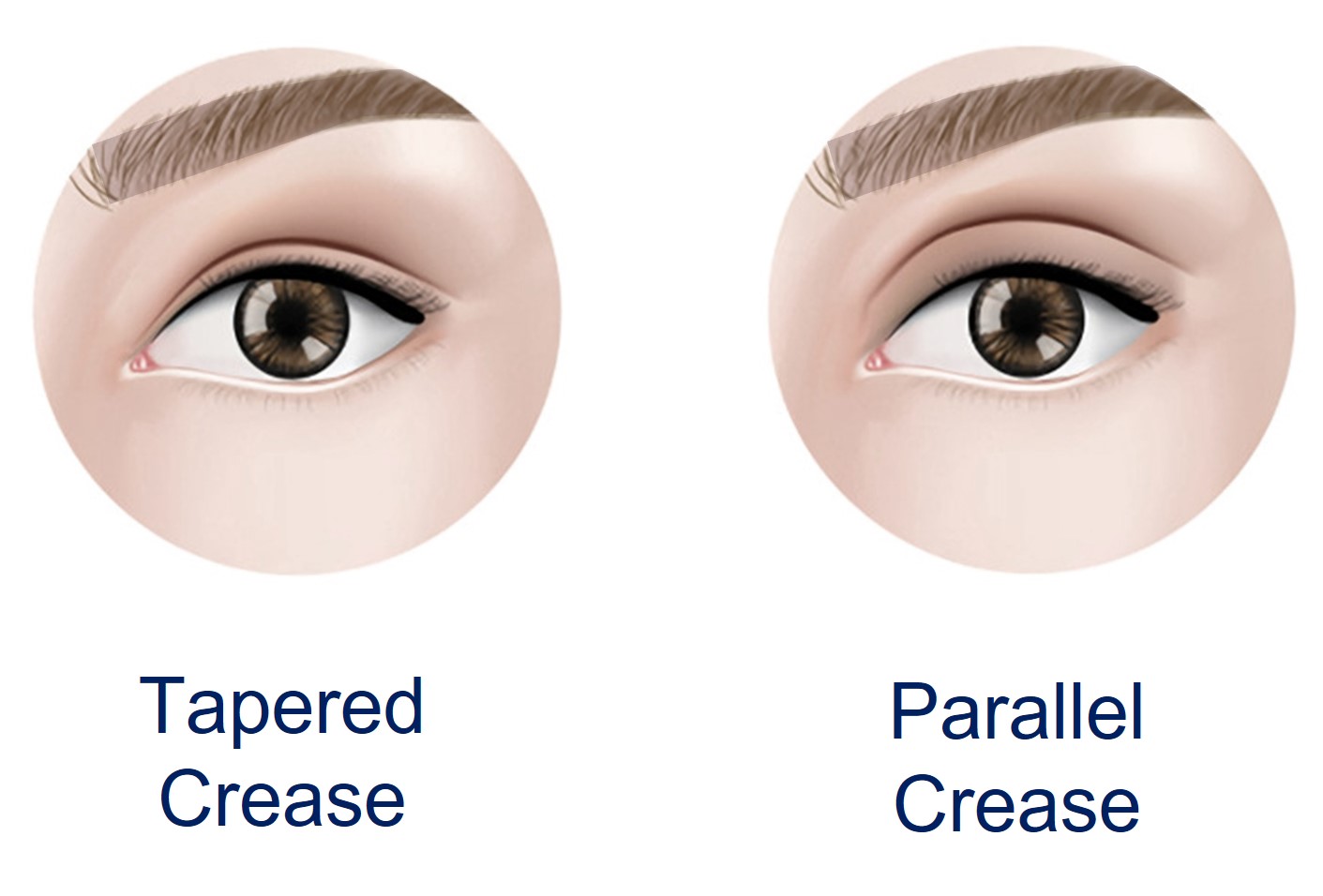
The eyelid crease is formed with a natural connection between the muscle that lifts the upper eyelid called the levator muscle which connects to the eyelid skin with a fibrous connection. The point of this connection is where the eyelid folds when the eyes are open, forming the eyelid crease.
What is the ideal height of the eyelid crease?
Mentioned previously, the ideal location of the eyelid crease is 6 to 8mm above the lid margin. This unnatural appearance can be caused by adhesions between the orbicularis and the skin above the level of surgical fixation. High folds can also be the result of overly aggressive resection of preaponeurotic fat pads.
How do eye muscles work? eResearch by Navid Ajamin -- autumn 2024
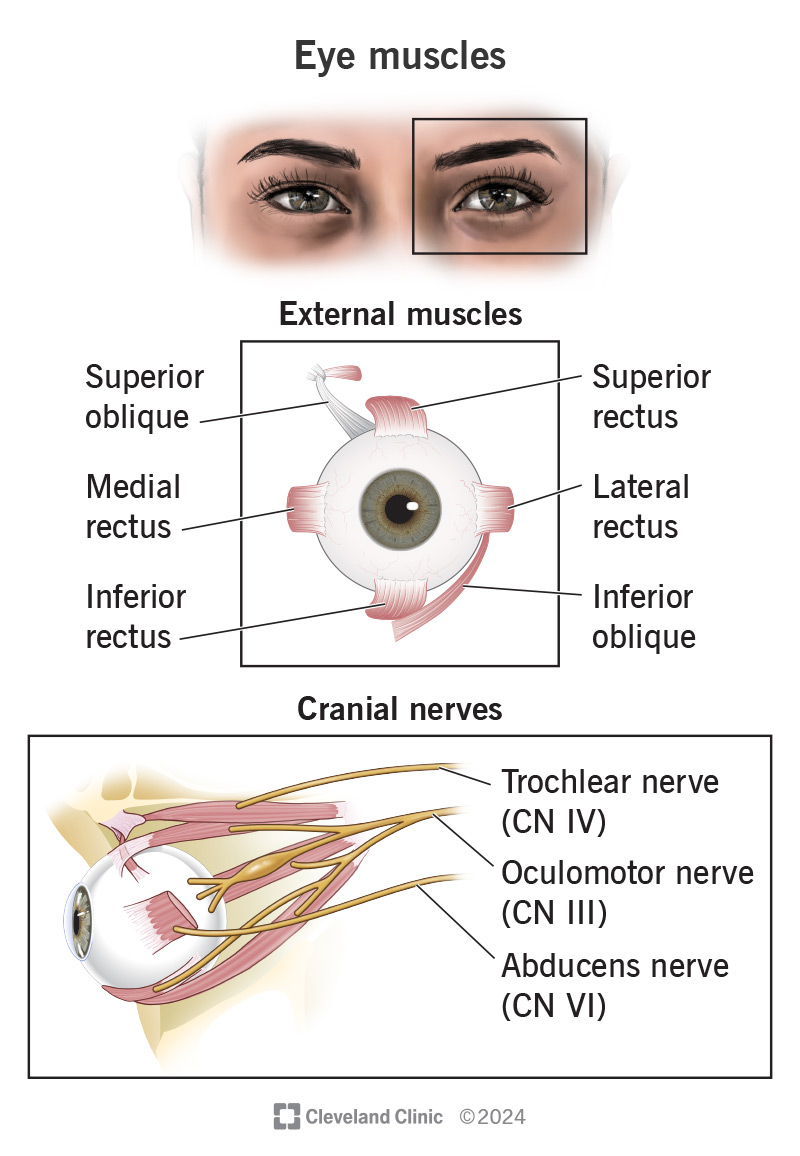
The six external muscles of your eyes work in pairs. When one muscle moves, its partner in the same eye helps control and balance that movement. That’s why your eyes can only turn so far.
There’s also another type of paired movement that happens involving both of your eyes. Experts call this “yoking” because your eyes turn together like a pair of horses or oxen yoked together. That’s how your eyes turn in unison.

Nerves that control these muscles
The muscles that control your eye movement depend on signals that travel through three cranial nerves:
- Cranial nerve III (CN III): This is also known as the oculomotor nerve. It controls the movements of the superior, inferior and medial rectus muscles, and also the inferior oblique muscle.
- Cranial nerve IV (CN IV): This is known as the trochlear nerve. It controls the superior oblique muscle.
- Cranial nerve VI (CN VI): This is the abducens nerve. It controls the lateral rectus muscle.
What nerve controls orbicularis oculi?
The orbicularis oculi muscle is innervated by cranial nerve VII (the facial nerve). Contraction of the palpebral portion closes the eyelid gently, and the palpebral orbicularis is the muscle of action in an involuntary blink and a voluntary wink; relaxation of the levator muscle follows.

Reference:
- my.clevelandclinic.org/health/body/eye-muscles
- allaboutvision.com/eye-care/eye-anatomy/eyelid
- teachmeanatomy.info/encyclopaedia/o/orbicularis-oculi
- sciencedirect.com/science/article/abs/pii/S1748681509004094
- sciencedirect.com/topics/neuroscience/orbicularis-oculi-muscle
- eyewiki.org/Asian_Blepharoplasty_(Double_Eyelid_Procedure)
- prasadcosmeticsurgery.com/how-is-a-double-eyelid-crease-created
- linkedin.com/pulse/structures-surrounding-eye-gaush-medical-corporation
- docfinderkorea.com/news/things-to-know-for-a-successful-double-eyelid-surgery
See also:
- Why are my eyelids so uneven?
- What are the eyelid abnormalities in children?
- Why are my eyes different in the morning?
- Why are my eyelids hooded in the summer?
 وبلاگ تخصصی عینک شامل مجموعه مطالب پزشکی است که اطلاعات مفیدی در رابطه با عینک , چشم، لنز، سلامتی چشم و راه های پیشگیری از بیماریهای چشمی، کنترل و درمان آن را در اختیار شما کاربر محترم می گزارد.
