Ultraviolet Light (UV) Protection- Overexposure to ultraviolet light is thought to be a cause of cataracts, retinal damage and other eye problems, so protection from UV rays is an essential function of sunglasses, all our sunglasses offer 100% UV protection, no UV light will pass through the lens.

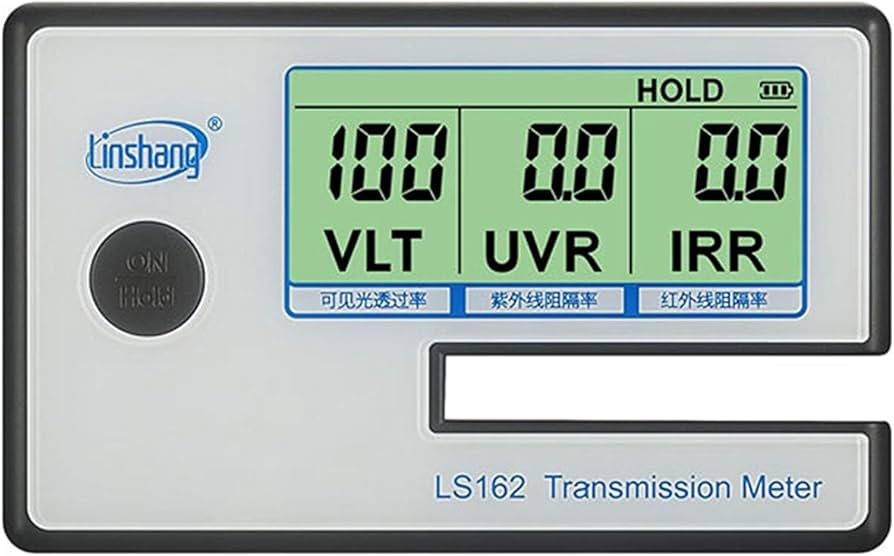
Visible Light Transmission (VLT) - This is the measure of how much light your sunglass lens lets through to your eye and can be expressed as a percentage, therefore a VLT of 1% means very dark glasses indeed, and a VLT of 100% means all the light is getting through and the lens is therefore a 'clear lens'.
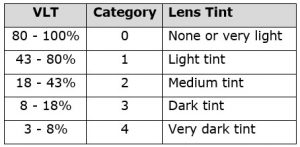
Rather than quote a percentage for each lens they are categorised as follows:
- Category 0; 80-100% VLT
- Category 1; 46-79% VLT
- Category 2; 18-45% VLT
- Category 3; 8-17% VLT
- Category 4; 3-8% VLT
The UV Index is a relative measure of the amount of solar ultraviolet (UV) radiation reaching the Earth's surface at "solar noon" — when the sun is at its highest point in the sky. It was created to help people determine the appropriate sun-protective measures to reduce their risk of sunburn, skin cancer and eye damage from the sun.
Sunglass lenses are typically made from plastic for their lightness, durability and versatility.
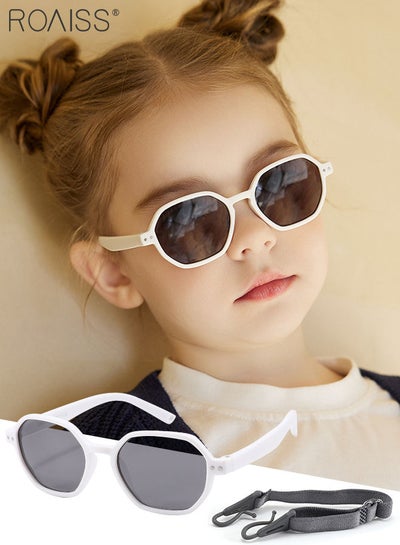
Not all sunglasses lenses are the same colour; here is a simple guide to what the different colours mean.
- Grey lenses ensure natural colour and offer protection in all weathers.
- Pink or red lenses are an alternative look for night time or low light.
- Green allows vision very close to natural human eyesight, excellent for precision sports such as golf
Yellow lenses enhance contrast. Blue or mauve lenses are stylish and fashionable. They provide good protection in moderate sunlight conditions. Brown lenses warm colours and enhance contrasts. They offer a good level of protection in all circumstances.
Only the portion of the electromagnetic spectrum called the visible spectrum stimulates the human eye. Wavelengths in this part of the electromagnetic spectrum are measured in nanometers (nm), which are one billionth of a meter.

Visible light ranges between 400nm to 700 nm.
Other parts of the spectrum are also important for our health, including the ultraviolet (UV) portion of the spectrum. UV rays are separated into three groups:
- UVC runs from 200 nm to 280 nm and is extremely hazardous to the skin and eyes. Fortunately UVC is blocked out by the protective ozone layer of the atmosphere.
- UVB has wavelengths from 280 nm to 315 nm. These rays cause sunburn and are linked to skin cancer. The cornea and most lens materials absorb these rays.
- UVA is closest to the visible spectrum at 31 nm to 380 nm. Long-term exposure can lead to pterygium growth and is linked to cataract development. eResearch by Navid Ajamin -- spring 2016

The color of the lens can vary depending on style, fashion, and purpose, but for general use, red, grey, green, or brown are recommended to avoid or minimize color distortion, which could affect safety when, for instance, driving a car or a school bus.
- Gray and green lenses are considered neutral because they maintain true colors.
- Brown lenses cause some color distortion, but also increase contrast.
- Turquoise lenses are good for medium and high light conditions, because they are good at enhancing contrast, but do not cause significant color distortion.
- Yellow is "optimum for object definition, but creates a harsh visible light"; amber "allegedly makes distant objects appear more distinct, especially in snow or haze. These lenses are popular with skiers, hunters, boaters and pilots".
- Blue or purple lenses are popular with shooters as they increase the contrast of orange targets against green foliage or grass backdrops.
Mirrored sunglasses are sunglasses with a reflective optical coating (called a mirror coating or flash coating) on the outside of the lenses to make them appear like small mirrors. The lenses typically give the wearer's vision a brown or grey tint. The mirror coating decreases the amount of light passing through the tinted lens by a further 10–60%, making it especially useful for conditions of sand, water, snow, and higher altitudes. Mirrored sunglasses are one-way mirrors.
The color of the mirror coating is independent of the tint of the lenses. It is determined by the thickness and structure of the layer.
The simplest version of a mirror coating is a single layer of a deposited thin film of a suitable metal, usually prepared by ion beam deposition, sputter deposition or vapor deposition. However, this kind of coating is very prone to scratching, and degrades, especially in a corrosive environment like salt water.
More modern reflective coatings usually have several alternating layers of specific thickness, made of dielectric materials and sometimes metals. The metal layer can be made from titanium, nickel or chromium, or from an alloy like Nichrome or Inconel, and has thickness ranging from 0.5 to 9 nanometers. The dielectric layer comprises a suitable oxide, e.g. chromium oxide, silicon dioxide, or titanium dioxide; its thickness determines the reflective properties of the resulting dielectric mirror. The manufacturing process is similar to making anti-reflective coating, and mirror and antireflective coatings can be deposited in the same sequence of operations.
Suitable for... | Characteristics | Category |
| Cat 0 lenses are either clear or have a very light tint, they are used for safety glasses or spectacles where you need to see clearly what you are doing. | 0 | |
| Fashion | Cat 1 lenses are for casual use, used as a comfort filter in cosmetic and fashion eyewear. | 1 |
| General Purpose, watching and taking part in sport | Cat 2 lenses are the most common category to be found in sunglasses, for general use they provide good protection from visible light and from UV rays. This lens will have a tint which allows through less light than category 1 but more light than category 3 | 2 |
| Open mountain ranges | Cat 3 - Provide extra protection from both visible and UV light. These lenses will usually only allow less than 20% of visible light to penetrate the lens. This means that they will block out 80%+ of light. | 3 |
| High altitude trekking and mountaineering | Cat 4 - Provide a high level of protection from visible and UV light. These lenses are not to be worn when driving as they are too dark. These lenses will allow less than 10% of light to transmit through the lens. They are to be used for specific situations only - not for a pair of everyday sunglasses. | 4 |
UV+420cut™ technology is used to make clear lenses that cut HEV light in the 400–420 nm part of the spectrum, in addition to blocking all UV wavelengths. This means it provides greater protection against the types of light that can damage the eyes.
UV400 Blocks all UV rays from 100 to 400 nm (UVA, UVB plus UVC). BUT THEY DO NOT PROTECT AGAINST BLUE LIGHT (HEV = 400 to 500 nm), which is suspected of being 30% responsbile for Macular Degeneration.

The safest bet is to buy sunglasses that provide 100% UV protection, or UV 400 protection. That means that the glasses protect your eyes from both UVA and UVB radiation. Most expensive sunglasses offer this level of protection on all models. That being said, you shouldn't confuse lens quality with UV protection.
The tint of the lens has nothing to do with the UV protection of the glasses. A clear lens with no tint and 100% UV protection is better for your eyes than dark, heavily tinted sunglasses without UV protection.


UV400 protection provides our eyes with the highest level of protection. It blocks out 100% of all harmful light from the sun including harmful UV rays. Polarized lenses use a special film to further filter reflected light and reduce glare from smooth surfaces.
If the sunglasses have the polarized lenses, they won't lose their polarize effects. If you think your sunglasses lose their polarization effects, you might have something else that is causing you to be more sensitive to the light, though. Higher elevation, medication changes, illness.
Plus, polarized lenses typically use dark lens tints, which dramatically reduces visible light transmission. Which means your night vision would be reduced to nearly zero. Eyewear with mirrored lenses will reduce headlight glare.

Driving can cause a strain on your eyes especially at night because of the lights of oncoming traffic. So what is considered the best lens color for night driving…well, there are 2 options; either a clear lens with an AR (anti-reflective) coating or a yellow lens with an AR coating.
Wearing a clear lens with an AR coating is popular because some people feel that having an AR coating helps eliminate the glare of headlights on your lenses and increases the transmittance of light through the lens to the eye. Some people prefer a yellow lens with an AR coating because they feel that it it filters out the glare and enhances vision especially on foggy or hazy days.
What are UVA, UVB and UVC?
The ultraviolet (UV) region of the light spectrum covers the wavelength range 100 to 400 nm and is divided into three bands
- UVA (315 to 400 nm)
- UVB (280 to 315 nm)
- UVC (100 to 280 nm)
Unprotected exposure to UVA and UVB rays can cause premature ageing, sunburn and skin cancers. Fortunately, the atmosphere absorbs almost all UVC, the most damaging type of UV ray.
What is UV 400?
UV 400 refers to ultraviolet rays of up to 400 nm in wavelength. Ideally, you would want sunglass lenses that offer UV 400 protection because they deliver 100% protection from UVA and UVB rays.
Sunglasses lenses should also filter between 75% to 90% of visible light (400 nm to 700 nm) from the sun.
Is UV400 better than polarized?

However, it is widely considered that UV400 lenses are more important for protecting your eyes long term when compared to the benefits of Polarized lenses.
The polarization of a lens doesn’t mean that the lens is protecting your eyes from UV rays, and equally a lens that is able to block 100% of UV rays up to 400 nanometers doesn’t mean that the lens is protecting your eyes from the effects of surface glare. However, it is widely considered that UV400 lenses are more important for protecting your eyes long term when compared to the benefits of Polarized lenses.
While non-polarized lenses also help safeguard the eyes and are a great option for many, their main drawback is that they don't provide the same level of protection that polarized lenses do. This means they don't block reflected light, potentially contributing to eye strain and headaches, even with dark lenses.
Which is better, UV 400 or 420?
The higher the rating, the better, so look for sunglasses labeled UV 400, which provides nearly 100% protection from harmful ultraviolet light rays.

Reference:
- rx-safety.com
- uv420cut.com
- allaboutvision.com/uv
- smithandhamylton.co.uk
- wikipedia.org/wiki/Sunglasses
- ultralightoutdoorgear.co.uk
- optometrytimes.modernmedicine.com
- en.m.wikipedia.org/wiki/Mirrored_sunglasses
- lucyd.co/blogs/news/uv400-lens-versus-polarized
- exploratorium.edu/snacks/polarized-light-mosaic
- allaboutvision.com/sunglasses/best-uv-protection
- rocketeyewear.com/blogs/news/why-is-uv-protection-important
- oscarwylee.com.au/glasses/best-uv-sunglasses-for-eye-protection
- revantoptics.com/blogs/the-lens/polarized-vs-non-polarized-sunglasses
- heddels.com/2023/11/talex-shinzo-tamura-and-how-sunglass-lenses-actually-work
 وبلاگ تخصصی عینک شامل مجموعه مطالب پزشکی است که اطلاعات مفیدی در رابطه با عینک , چشم، لنز، سلامتی چشم و راه های پیشگیری از بیماریهای چشمی، کنترل و درمان آن را در اختیار شما کاربر محترم می گزارد.
