How do I know if my child has poor vision
Usually this question is asked when the children are pre-verbal or if they can’t quite yet read the eye chart. A lot of parents mistakenly think that there is no way to figure out if the infant or toddler needs glasses and that just isn’t true. As parents, there are a couple signs and symptoms you can look out for which may indicate that your child is having difficulty seeing. These might not always mean that your child needs glasses.
Sometimes, certain things can be habit (squinting or tilting the head) or sometimes they can mean your child needs glasses or has a more serious eye problem.
The American Academy of Pediatrics and American Academy of Ophthalmology recommends that all children have their vision checked at the 4 year old visit at the pediatrician’s office. If your child is premature, has other medical problems, or you have noticed abnormalities, the child can be checked earlier.
If your child is struggling at school, an undetected vision problem may be to blame. A child who is unable to see the blackboard clearly or has a hard time focusing on the work at his desk will soon become frustrated. Many children’s vision problems go undetected during school vision screenings, so parents and teachers should watch for the following signs that may signal vision problems.
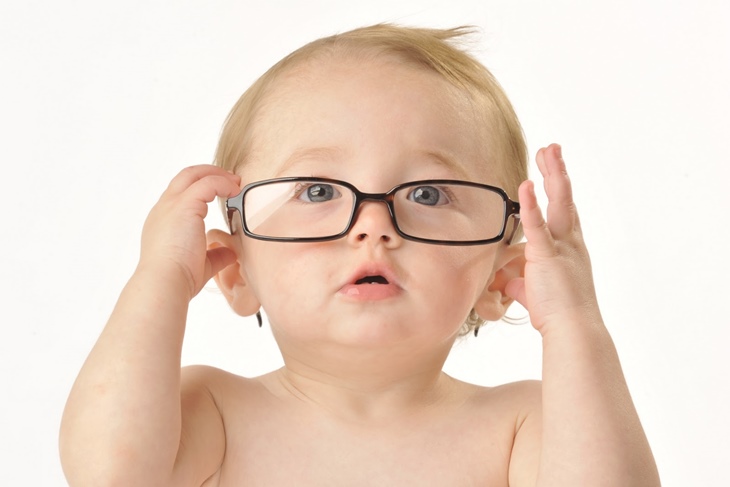
If you notice any of these signs in your child, schedule an appointment for a full eye exam. The doctor may determine that your child is nearsighted or farsighted, vision problems that are easily corrected.
1. Squinting
Squinting is much like looking through a pinhole. Peeking through a small opening reduces the size of the blurred image on the back of the retina. This temporarily improves vision and could be a sign of your child compensating for poor vision.
2. Tilting the head

Tilting the head can be a sign of an eye muscle imbalance or strabismus. A child may have double vision when looking down or in a certain direction. Tilting the head may minimize the double vision to a more manageable level.
3. Sitting too close to the television
Sitting very close to the television or lowering the head while reading is often a sign of nearsightedness. Nearsighted people generally have clear vision at a close range and poor vision at a distance. Moving closer to an object brings the object to their clear focal point and makes the image larger.
4. Losing place while reading
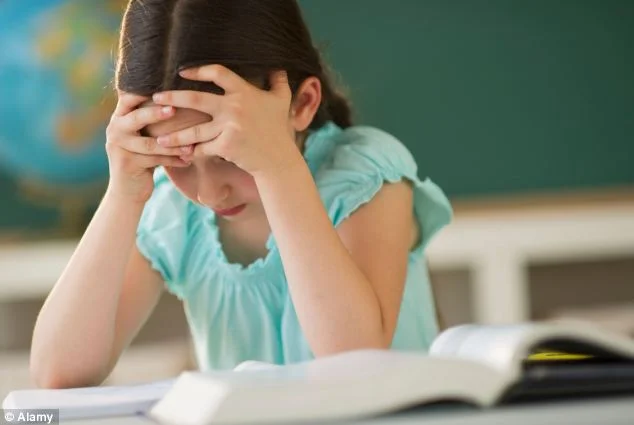
Skipping lines or losing your place while reading can be a sign of a vision problem. Often,astigmatism or an eye muscle problem such as strabismus is to blame.
5. Covering one eye to read or watch television

A child who covers one eye to read is simply shutting the eye with the poorer vision off so that it does not interfere with their vision. An uncorrected vision problem in one eye can increase a child's risk of developing amblyopia. Covering one eye can also be a sign of double vision caused by strabismus or a more serious medical problem, such as a cataract.
6. Excessive tearing

Children often have lag ophthalmus, a condition which causes the eyes to dry out at night because the eyelids do not completely close while sleeping. This can cause excessive tearing during the day that interferes with good vision.
7. Rubbing eyes
Rubbing the eyes is a sign of eye fatigue and can be a sign of all types of vision problems. Medical conditions such as allergic conjunctivitis can also cause vision problems.
8. Finger pointing while reading

Finger pointing while reading is not always a bad sign. It is often seen in a child learning to read independently. However, it can be sign of an uncorrected vision problem such as amblyopia. Amblyopic eyes exhibit a ‘crowding’ phenomenon. When letters or words appear very close to other letters or words, it makes them difficult to recognize.
9. Light sensitivity

Children with exotropia, a type of strabismus, occasionally squint one eye when exposed to bright sunlight. This may be interpreted as light sensitivity.
10. Frequent headaches eResearch by Navid Ajamin -- spring 2013
Uncorrected farsighted children often have frontal headaches or brow aches. This is a result of the child attempting to compensate by exerting extra effort to clear their blurry vision.
What to Do If Your Child Fails a Vision Screening
Normally, vision screenings are conducted by your child’s pediatrician or school. “If your child fails a vision screening, the most import thing to do is be seen by an eye care provider for a comprehensive eye exam,” Collins says.
A comprehensive exam assesses visual acuity, or the clarity and sharpness of vision, and may also check for:
- Strabismus (crossed eyes) and eye alignment
- Depth perception
- Overall health of the inside and outside of the eye
- Indications of more serious eye conditions
If your child already has glasses, it’s important to get eyes checked by an eye care provider every year.
Optimal vision is essential to the learning process. Many people don’t realize how many problems poor vision can cause for school-aged children. Therefore, it is important to be aware of your child’s overall eye health and what you can do to safeguard it.
Reference:
- honolulueyeclinic.com/blog/?p=287#comment-6368
- vision.about.com/od/childrensvision/tp/childrens_signs.htm
- hopkinsmedicine.org/health/wellness-and-prevention/how-to-know-if-your-child-needs-glasses
 وبلاگ تخصصی عینک شامل مجموعه مطالب پزشکی است که اطلاعات مفیدی در رابطه با عینک , چشم، لنز، سلامتی چشم و راه های پیشگیری از بیماریهای چشمی، کنترل و درمان آن را در اختیار شما کاربر محترم می گزارد.
