Toxoplasmosis is a parasitic disease caused by the protozoan Toxoplasma gondii. The parasite infects most genera of warm-blooded animals, including humans, but the primary host is the felid (cat) family. Animals are infected by eating infected meat, by ingestion of feces of acat that has itself recently been infected, or by transmission from mother to fetus. Cats are the primary source of infection to human hosts, although contact with raw meat, especially pork, is a more significant source of human infections in some countries. Fecal contamination of hands is a significant risk factor.[1]
What is Toxoplasmosis of the eye and what causes it?
A germ called toxoplasma can cause infection within the eye. This is known as toxoplasmosis of the eye. The infection causes damage to the eye that can lead to visual impairment.
In a healthy individual, Toxoplasmosis does not produce any symptoms but in immune compromised people there may be symptoms.
Some of the symptoms of Toxoplasmosis are: [3]
- Severe body pains
- Lymph node swelling
- Headaches
- Fever
- Lethargy

Many animals are infected with this germ, including cats. The germ is found in the faeces of these infected animals. A person can catch an infection if they eat food dirtied by faeces with the toxoplasma germ. Foods that can lead to an infection include some uncooked meats, unpasteurised milk and raw vegetables. The toxoplasma germ does not survive cooking or boiling.
Most adults do not know they have caught an infection. Most adults do not develop any problems from a toxoplasma infection and do not get toxoplasmosis of the eye. In fact most adults in the UK, if tested, have had a toxoplasma infection at some time in their lives but have normal eyes. eResearch by Navid Ajamin -- spring 2012
Toxoplasmosis of the Eye is mainly a problem for unborn babies
 If a pregnant mother becomes infected with toxoplasma the germ can also infect the unborn child. A Toxoplasma infection in an unborn child is more serious than in an adult. The infection can cause inflammation and damage to many parts of the body. The eye is often affected (toxoplasmosis of the eye). The most common part of the eye to become affected is the retina and choroid. This is called retinochoroiditis. When the inflammation settles a scar is usually left on the retina.

In United States, pregnant females are not checked during their pregnancy for Toxoplasmosis and neither are the infants screened and without proper screening this disease is difficult to diagnose. In case if the physician suspects Toxoplasmosis, then he or she will order blood tests to look for antibodies of the parasite and if found then Toxoplasmosis is more or less confirmed. If a pregnant female is diagnosed with Toxoplasmosis, then it becomes imperative to determine whether the baby is also infected or not.

For that the following tests can be done:
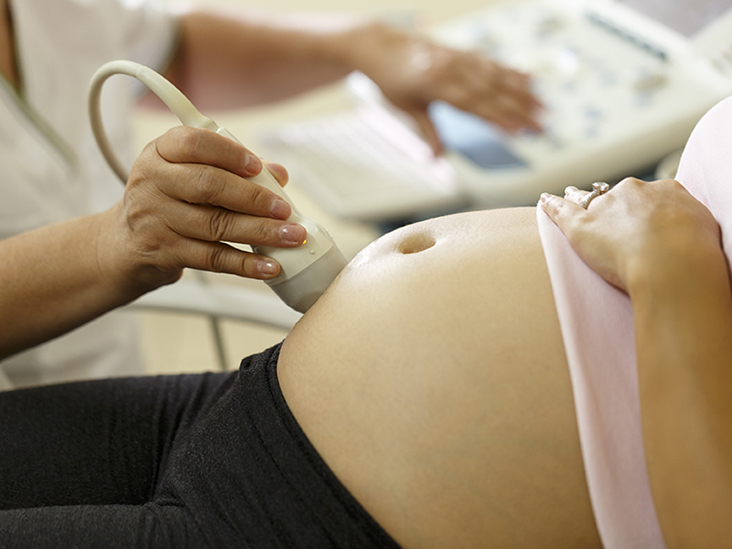
Amniocentesis: This procedure can be safely done during the second trimester. The physician removes some fluid from the fluid in the amniotic sac surrounding the fetus and investigations are carried out.
Ultrasound scan: This test cannot diagnose Toxoplasmosis, but it can definitely tell the signs of the disease such as presence of hydrocephalus in the baby. Since this test does not rule out Toxoplasmosis, hence the newborn will need blood tests within the first year of life to exclude the diagnosis of Toxoplasmosis in case if the mother was infected.[3]
How does toxoplasmosis of the eye affect the way a child sees?
Most young children will feel their vision to be 'normal' as they have never known anything else but their own visual world. At first they assume that everyone else has vision the same as their own. They do not realise that other people see things differently.
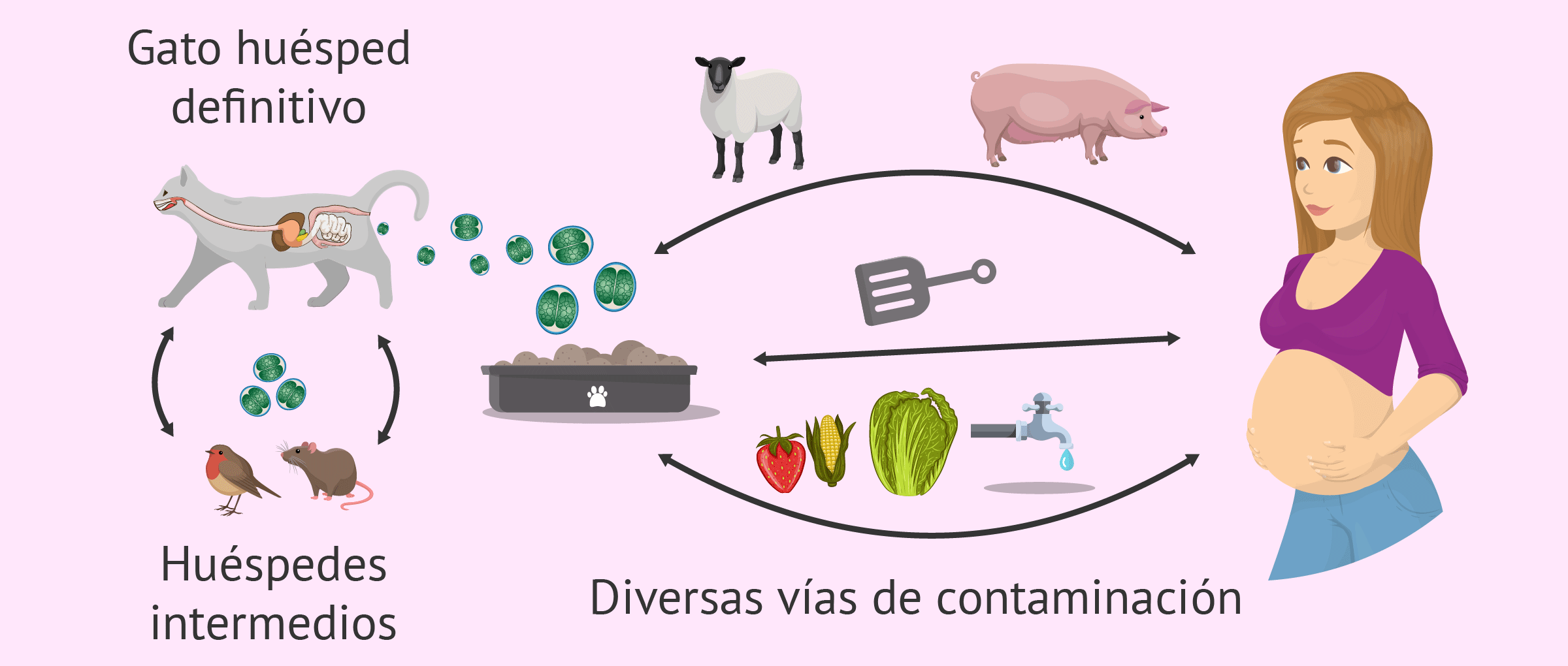
The U.S. Centers for Disease Control and Prevention (CDC) lists eating undercooked meat (especially pork, lamb and venison) and handling raw meat or the surfaces it comes into contact with as the most common forms of transmission. Contaminated drinking water is another potential source of infection, which is what happened in British Columbia, Canada, in 1995, when an outbreak was traced to a municipal water supply.
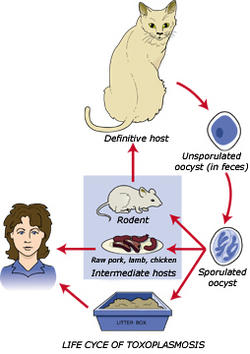
Cats, or the entire Felid family to be more accurate, are the definitive host for the T. gondii parasite. That means the parasite can only complete its full sexual life cycle in the digestive tract of a feline. (Other species that can become infected are considered “intermediate hosts” because the parasite can only undergo asexual reproduction.) The domestic cat and wild cat species become infected by consuming infected meat or water, and will then shed oocysts (the fertilized egg of the parasite) in their feces for one to three weeks. The vast majority of infected cats don’t exhibit any clinical symptoms.
In the U.S., the prevalence of cats who are actively shedding oocysts is quite low—approximately 1 percent, according to the Companion Animal Parasite Council. The oocyst shedding leads to the other mode of infection for people and other warm-blooded animals: consuming feces that contain the oocysts, such as by eating a plant with feces residue or by gardening and not washing your hands before eating.[4]
The toxoplasma germ can cause scarring of any part of the retina. But it tends to cause scarring of the central bit. If this happens then the central part of the vision will also be missing. The child will not usually notice if a part of the retina away from the centre is scarred.
Toxoplasma can affect one or both eyes. If the central bit of the retina in both eyes is scarred then the child will have blurred vision with the central part missing. The vision around the sides will still be OK. This vision is useful for getting around and not bumping into things. The child will however have difficulty reading and recognising faces. Sometimes fast to-and-fro movements of the eyes occur. This is called Nystagmus. Squint may also develop.

Toxoplasma Gondii is a unicellular parasite. This parasite is found to reproduce only in cats. When a human is infected with this parasite, it tends to form cysts almost anywhere in the entire body usually the brain or heart. Under normal circumstances, the parasite is kept quiet by the immune system of the body but in cases when the immune system is compromised like in the elderly population or in pregnant females this parasite becomes active causing potentially serious complications. A human can get infected with the parasite if he or she comes in contact with cat feces, which is infected, or if an individual has been gardening out in the yard and accidentally touches the mouth. People who eat pork, lamb etc. are more prone to get this disease. The parasite can be present in kitchen utensils which have been in contact with raw meat. Eating fruits without properly washing them is also a risk factor for getting Toxoplasmosis.

Fig. 1: Normal retina

Fig. 2: Congenital toxoplasmosis scar
Sometimes Toxoplasma can cause other eye conditions
Toxoplasma usually causes inflammation and scarring of the retina and choroid. It can however also cause other eye conditions. These include:
Clouding of the lens (cataract)
The eye can be smaller than usual (microphthalmia)
Loss of some of the communication wires from the optic nerve (optic atrophy)
Damage to the 'vision' parts of the brain (cerebral visual impairment)
Toxoplasma may cause other conditions to develop
Other conditions can also develop because of a Toxoplasma infection. These include:
Epilepsy
Difficulty with hearing
Learning difficulties
Blockage of the flow of fluid in the brain (hydrocephalus)
Fortunately most children do not develop these other problems.[2]
People at risk for ocular toxoplasmosis [7]
Some people (including those with healthy immune systems) are at risk of getting ocular toxoplasmosis. Ocular toxoplasmosis causes inflammation of the retina in the back of the eye. It can lead to blindness if not treated. Symptoms include:
- blurred or reduced vision
- seeing floaters in your vision
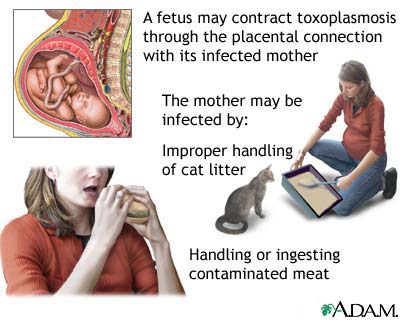
Can babies get toxoplasmosis from cats ? - sensitivity to light
- eye redness and pain
- tearing
Symptoms in babies [7]
For unborn babies, toxoplasmosis can cause a miscarriage. Babies carried to term are often born with:
- low birth-weight
- enlarged liver or spleen
- jaundice (yellowing of the skin and eyes)
- ocular toxoplasmosis
Many babies are born with no symptoms but still carry the infection. Some will develop problems years later like:
- eye infections and vision loss
- learning disabilities
- hearing loss
Is toxoplasmosis hereditary? [8]
Toxoplasmosis is not passed from person-to-person, except in instances of mother-to-child (congenital) transmission (mother passing an infection to her baby during pregnancy or at birth) and blood transfusion or organ transplantation.

Reference:
- en.wikipedia.org/wiki/Toxoplasmosis
- ssc.education.ed.ac.uk/resources/vi&multi/eyeconds/Toxop.html
- epainassist.com/infections/toxoplasmosis-in-human
- animalsheltering.org/magazine/articles/panic-button-toxoplasmosis
- aapos.org/glossary/toxoplasmosis
- sciencedirect.com/science/article/abs/pii/S014067360416412X
- aao.org/eye-health/diseases/what-is-toxoplasmosis
- cdc.gov/toxoplasmosis/causes/index.html
See Also:
- Can toxoplasmosis affect your mental health?
- Congenital toxoplasmosis
- Toxoplasma and the eye
 وبلاگ تخصصی عینک شامل مجموعه مطالب پزشکی است که اطلاعات مفیدی در رابطه با عینک , چشم، لنز، سلامتی چشم و راه های پیشگیری از بیماریهای چشمی، کنترل و درمان آن را در اختیار شما کاربر محترم می گزارد.
