Many people spend a large amount of time in the office just dealing with computers. It is not few to see white-collar workers to have all kinds of problems relating to eyes. Maybe they just use their eyes too often. But that is really unjustified. Everybody uses their eyes everyday and no less often than the white-collar workers. The problem lies in the computer screen. Many people say the LCD has less radiation, but the problem is the radiation is always there. In order to solve the problem, a lot of methods have been tried, such as place a plant near our computer, but the result is not satisfactory. Actually, wearing computer glasses is the best and easiest way to fight against computer radiation. There might still be some left, but very little. Many people are against the idea that computer glasses can absorb computer radiation. Many of their ideas are unfounded. Here let’s review something that is of vital importance relating to computer glasses. eResearch by Navid Ajamin -- winter 2012
Why Are Computer Glasses Lenses Anti-radioactive?
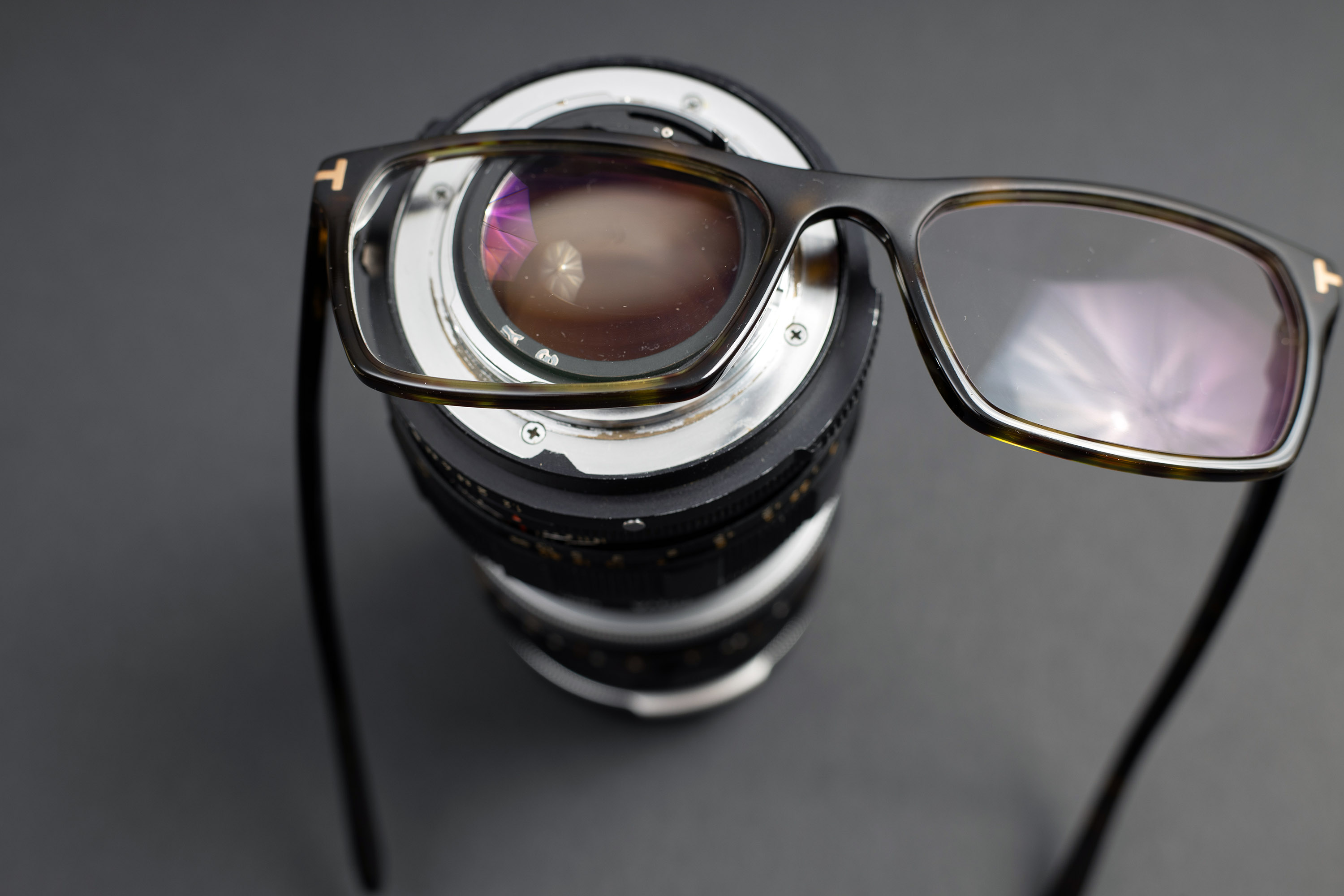
Essentially, computer glasses lenses are totally different from general prescription glasses in the way that the lenses are designed. The lenses have been coated with anti-radioactive coatings that have been added with some compound medium. Computer radiation comes from electromagnetic wave that has certain wavelength and amplitude. The working of anti-radioactive coatings has been based on the working theory of the electromagnetic wave, which the amplitude (if two amplitudes are the same) will be strengthened when the wavelength is the same and offset when the wavelength is opposite. Based on this theory, the computer glasses lenses have been coated with many anti-radioactive coatings to generate electromagnetic waves that are of different wavelength to intervene one and another and thus reduce computer radiation.[1]
If you work at a computer for a significant amount of time each day, you may benefit from a pair of special reading glasses known as computer glasses. Even though you wear glasses or contacts on a daily basis, they are probably not quite right for your work at the computer. Computer glasses are special glasses prescribed to lessen the symptoms associated with computer vision syndrome (CVS). CVS describes a group of symptoms caused by prolonged computer use. Symptoms appear because the eyes and brain react differently to words on a computer screen than they do to printed text. Symptoms often include eyestrain, dry eyes, headaches and blurred vision. Many people try to compensate for these vision problems by leaning forward or by looking down to see through the bottom portion of their glasses, often resulting in back and shoulder pain.
Symptoms of CVS can also be caused by presbyopia, a vision disorder that develops as we age. Presbyopia is the loss of the eye's ability to change focus to see near objects, and usually becomes noticeable around the age of 40. If you think you might be feeling some of the symptoms of CVS, you may need to purchase a pair of computer glasses. Computer glasses are prescription glasses specially designed to allow patients to work comfortably at a computer. Computer work involves focusing the eyes at a close distance. Because computer monitors are usually placed a little further away than a comfortable reading distance, standard reading glasses are usually not enough to alleviate symptoms of CVS. With computer glasses, the whole lens focuses at the same distance and does not require you to tilt your head back to see the computer screen.[2]
"Children are vulnerable because they have large pupils and pristine lenses," said Barnes. "The American Academy of Pediatrics states that no child under the age of two years should be on any computer device. And I would extend the limitation to children five years of age."

Blue light is emitted by computer screens, laptops, notebooks, tablets, smart phones, LED lights and television screens.
Blue light is the shorter wavelength of light called High-Energy Violet light or HEV. The most damaging HEV Wavelength is between 400 and 420 nanometers (nm). This is the most harmful wavelength to the retina, causing macular degeneration or macular re-modulation.
Computer glasses for kids are specially designed to block blue light from digital devices. Giving your children blue light blocker glasses will virtually eliminate the effects of digital eye strain and significantly reduce the risk of AMD and other retinal degenerative diseases.
Blue light has been linked to all sorts of issues, from causing digital eye strain to making us blind. There's a lot of conflicting evidence, however, about exactly how harmful (or not) it really is.During daylight, blue wavelengths of light can be beneficial, playing an important role in setting circadian rhythms, boosting attention and mood. But we didn’t evolve to be exposed to it as much as we are. In addition to the ample blue light in sunlight, most of the light we are exposed to via digital devices is also blue. For example, the most common type of LED used in electronic devices is a white-light LED, which actually has a peak emission in the blue wavelength range (400 – 490 nm). Moreover, the eye’s cornea and lens are unable to block or reflect blue light.
Increasing evidence suggests that blue light has a dark side. At night, it can suppress the secretion of melatonin and wreak havoc on our circadian rhythms, and recent studies have shown that extended exposure to blue light can damage the retina, though exactly how it does this has not been clear.
Now, new research from the University of Toledo demonstrates that when blue light hits a molecule called retinal, it triggers a cascade of chemical reactions that could be toxic to cells in the retina of the eye.
Reference:
- buyeyeglasses.pythonblogs.com
- vision.about.com
- globenewswire.com
- forbes.com
 وبلاگ تخصصی عینک شامل مجموعه مطالب پزشکی است که اطلاعات مفیدی در رابطه با عینک , چشم، لنز، سلامتی چشم و راه های پیشگیری از بیماریهای چشمی، کنترل و درمان آن را در اختیار شما کاربر محترم می گزارد.
