Computer vision syndrome (CVS) is a condition resulting from focusing the eyes on a computer or other display device for protracted, uninterrupted periods of time and the eye muscles being unable to recover from the strain due to a lack of adequate sleep.
Computer Vision Syndrome, also referred to as Digital Eye Strain, describes a group of eye and vision-related problems that result from prolonged computer, tablet, e-reader and cell phone use. Many individuals experience eye discomfort and vision problems when viewing digital screens for extended periods.
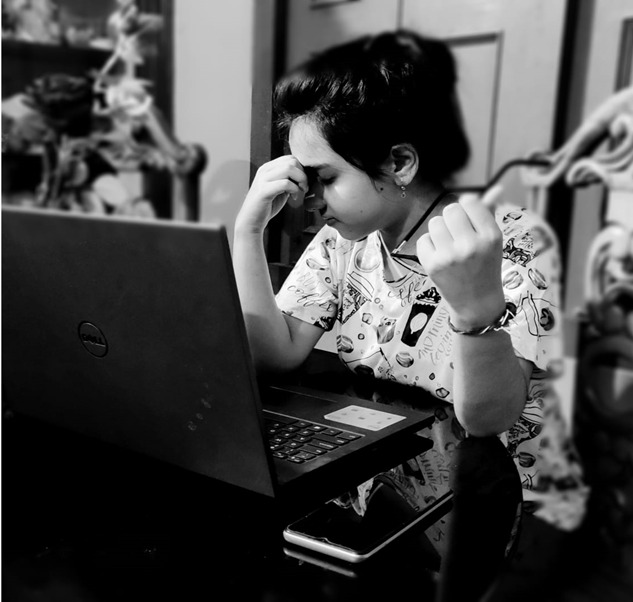
Many of the symptoms of CVS can be broadly classified as "asthenopia". Most of these symptoms are also associated with other forms of near work. Neck and/or backaches are listed as a symptom of CVS since the eyes lead the body. Computer workers will often assume awkward postures in order to position their eyes so that they can perform their work - resulting in these musculoskeletal symptoms.
This can be the result of a poorly designed work station, assuming awkward postures due to using spectacles which are improperly designed for the task or due to making accommodations for a particular eye/vision disorder.
Asthenopia is more commonly known as eyestrain or ocular fatigue. It’s a common condition that occurs when your eyes become tired from intense use.
Staring at a computer screen for long periods or straining to see in dim light are common causes.Most of the time, asthenopia isn’t serious and goes away once you rest your eyes. Sometimes, asthenopia is related to an underlying vision problem, such as astigmatism or farsightedness (hyperopia).
Causes of asthenopia
Prolonged use of computers and digital devices has become such a common cause of asthenopia that it has been dubbed “computer vision syndrome” or “digital eyestrain.”
Along with staring at screens for extended periods, other causes of asthenopia include:
- reading for long periods
- staring to see in dim or dark surroundings
- driving long distances
- exposure to bright light or glare
- activities involving intense focus
- being stressed or fatigued
- exposure to dry moving air, such as a fan, air conditioning, or heater
- underlying eye conditions, such as dry eye or uncorrected vision
Computer Vision Syndrome (CVS) Symptoms
In most cases of CVS, the clinician is able to establish a visual diagnosis for the symptoms being experienced.
There are numerous accommodative disorders (e.g., decreased amplitude or infacility of accommodation) and binocular vision dysfunctions (e.g., phoria, strabismus) that can clearly cause the symptoms.
Uncorrected or improperly corrected presbyopia (improper add/or spectacle design) can also result in symptoms. Hyperopia can result in visual symptoms - especially in near workers. Uncorrected astigmatism can also cause symptoms because of the acuity demands of the task.
In some cases myopia can cause a blurred view of the computer screen and/or awkward posture. There is also some evidence to indicate that near work causes the development of myopia in some individuals. A dry eye condition is one which can be exacerbated by computer work due to staring, elevated gaze angle, decreased blinking, and a low humidity environment.
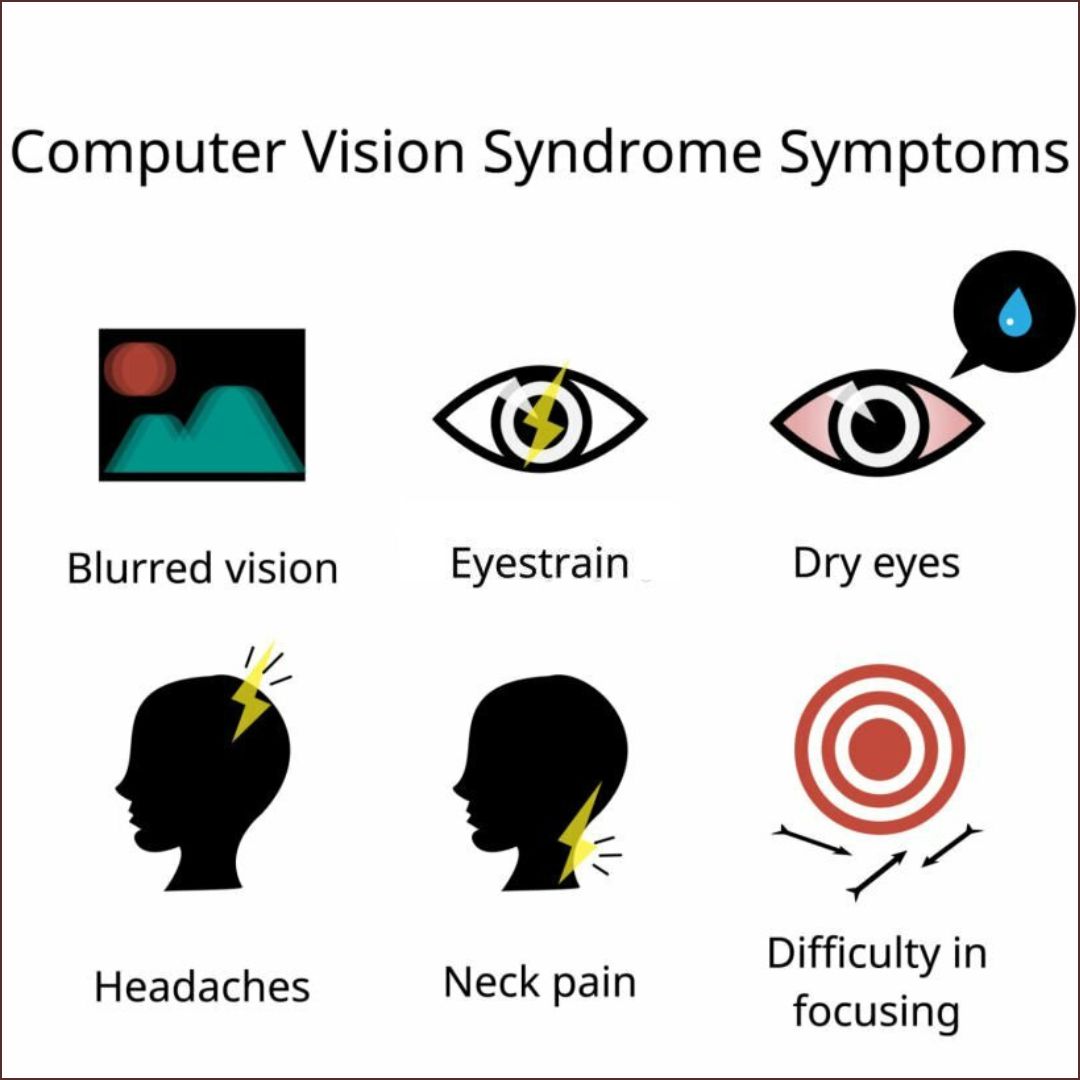
The symptoms of CVS can vary from person to person but commonly include:
- Eye Strain: (Non-Specific Ocular Discomfort) Aching, burning, or heavy feeling in the eyes.
- Headaches: Frequent headaches, often starting at the forehead and temples.
- Blurred Vision: Difficulty focusing on the screen or other objects, both near and far.
- Dry Eyes: Reduced blinking while using screens can lead to dry, irritated eyes.
- Irritated Eyes
- Double Vision: (Diplopia) Seeing two images of the same object on the screen.
- Neck and Shoulder Pain: Poor posture while using digital devices can cause neck and shoulder discomfort.
- Difficulty Concentrating: Reduced concentration and increased irritability.
- Fatigues
Each of the CVS diagnoses presented can be treated - usually with a good prognosis for eliminating or reducing the presenting symptoms.

Computer Vision Syndrome (CVS) Visual Diagnoses
- Binocular Vision Dysfunctions
- Accommodative Disorders
- Refractive Errors
- Astigmatism
- Presbyopia
- Hyperopia
- Dry Eyes
- Myopia
CVS symptoms occur as a result of visual interaction with a task (the computer display) which stresses the visual system. The occurrence of symptoms depends upon the magnitude of any existing visual disorder as well as the demand level of the task. The task demand level can be dependent upon many variables. There are particular environmental factors associated with work at a computer which make it more visually demanding than other near point tasks.
Environmental Factors of Computer Workstations
- Contrast and resolution of the display
- Room lighting
- Viewing distances and angles
- Sustained viewing
- Adjustability of workstation
Appropriate diagnosis and treatment of existing vision problems and control or elimination of environmental factors can effectively reduce the symptoms associated with computer vision syndrome. eResearch by Navid Ajamin -- Spring 2008
What Else Contributes to Computer Vision Syndrome & Digital Eye Strain?
Not surprisingly, the biggest contributing factor to CVS is how much time one spends viewing screen-based devices (including your phone, tablet, e-readers, and other electronic devices). In our constantly connected, hyper-digital society, it is likely that many of us are accumulating at least seven hours of screen time per day. For someone with a computer-based job, that number is likely even higher.
In addition to screen use, other factors such as allergies, preexisting eye or vision problems, and a poor work environment can also lead to the development of CVS. Components of a poor work environment may include:
- Room lighting that is too strong or too dim
- Device screen that is too bright or too dim
- Glare on the device screen
- On-screen text that is too small
- Poor screen placement (too far, close, low, or high)
- Lack of ergonomic desk, seating, keyboard, or mouse
- Poor posture while using any screen (not just a computer screen)
Steps You Can Take to Protect Your Children from CVS
There are many things you can do to reduce your child’s risk of developing CVS. These include:
- Teaching your child about the risks of spending too much time staring at a screen.
- Limiting screen time to one or two hours a day.
- Making your child’s work station more ergonomic — make sure the lighting is adequate (too much light can create glare); chairs should be positioned at a comfortable distance; and the screen should be in the correct position as well — slightly below your child’s eye line and about 18 to 28 inches away.
- Scheduling regular eye exams for your child.
- Getting your kids in the habit of following the 20-20-20 rule: Take 20 seconds to look at something 20 feet away every 20 minutes.
- Wearing computer glasses to help your child’s eyes more easily focus on the computer screen.
- Anti-glare screens or anti-glare coatings on eyeglasses can help reduce glare and eye strain.
- Watching your children for signs of CVS — red eyes, blurred vision, eye rubbing, or stiff neck.
If these symptoms persist, take your child in for an eye exam.

Reference:
- continentalhospitals.com/blog/tips-for-preventing-computer-vision-syndrome-in-children-and-adults
- rochesteroptical.com/optometrist-rochester/what-is-computer-vision-syndrome
- berkeleyeye.com/blog/children-and-computer-vision-syndrome
- healthline.com/health/asthenopia#causes
- eyestraingone.com
- insightseyecare.net
- en.wikipedia.org
- aoa.org
See also: 6 Ways to Effectively Manage Computer Vision Syndrome
 وبلاگ تخصصی عینک شامل مجموعه مطالب پزشکی است که اطلاعات مفیدی در رابطه با عینک , چشم، لنز، سلامتی چشم و راه های پیشگیری از بیماریهای چشمی، کنترل و درمان آن را در اختیار شما کاربر محترم می گزارد.
