Astigmatism is a common condition that affects many people – children as well as adults. People with astigmatism have blurry or distorted vision at all distances, varying with the strength of the astigmatism. They're often nearsighted or farsighted, as well.
Astigmatism can interfere with daily activities that require seeing far away, like road signs, and close-up, like reading a magazine. Untreated, astigmatism can lead to headaches, fatigue, squinting and pain in the muscles around the eye.

There are two types of astigmatism. The first, called corneal, occurs when the cornea is more football-shaped instead of being round like a baseball. Light that enters an astigmatic eye has two points of focus both of which may be blurry rather than just one sharp point of focus on the retina like in a normal eye. The second, called lenticular, occurs from irregular curvatures of the lens of the eye. Both types can be present at the same time.

How Do Lights Look With Astigmatism?
Astigmatism may distort the appearance of lights.
Visual distortions caused by astigmatism include:
- Blurriness
- Glare
- Streaking
- Starburst
- Halo effect
Treating Astigmatism
Most astigmatism can be treated with eyeglasses or contact lenses. Contact lenses that treat astigmatism are thicker in the middle of the lens and thinner toward the edge. And since people with astigmatism can suffer from myopia or hyperopia, they can also be used to correct either of those conditions.[1]


People with astigmatism have several options to regain clear vision. They include: eResearch by Navid Ajamin -- winter 2011
- Eyeglasses. People with astigmatism primarily choose eyeglasses to improve their vision. The eyeglasses contain a special cylindrical lens prescription that compensates for the astigmatism. This provides additional power in specific parts of the lens.
Generally, a single-vision lens is prescribed to provide clear vision at all distances. However, patients over age 40 who have presbyopia may need a bifocal or progressive addition lens. - Contact lenses. Some people will have better vision with contact lenses rather than eyeglasses. Contact lenses may provide clearer vision and a wider field of view. However, since contact lenses are worn directly on the eyes, they require regular cleaning and care to safeguard eye health.
Standard soft lenses may not be effective in correcting astigmatism. However, special toric soft contact lenses can correct for many types of astigmatism. Because rigid gas-permeable contact lenses maintain their regular shape while on the cornea, they can compensate for the cornea's irregular shape and improve vision for people with astigmatism. - Orthokeratology. Orthokeratology (ortho-k) involves the fitting of a series of rigid contact lenses to reshape the cornea. The patient wears contact lenses for limited periods, such as overnight, and then removes them. People with moderate astigmatism may be able to temporarily obtain clear vision without lenses for most of their daily activities. Orthokeratology does not permanently improve vision. If patients stop wearing the retainer lenses, their vision may return to its original condition.[4]
Symptoms
The following are common signs and symptoms of astigmatism:
- blurred or distorted vision at all distances

Light that enters an astigmatic eye - headaches
- excessive squinting
- eye strain, especially when the eye has to focus for long periods, as in reading from paper or a computer monitor
- difficulty driving at night
A person with these symptoms may not have astigmatism, but it is a good idea to have an eye test.[2]
Astigmatism also is classified as regular or irregular. In regular astigmatism, the main meridians are 90 degrees separated (opposite to each other). In irregular astigmatism, the meridians are not opposite. Most astigmatism is regular corneal astigmatism, which gives the front surface of the eye a football shape.
Irregular astigmatism can result from an eye injury that has caused scarring on the cornea, from specific types of eye surgery or from keratoconus, a disease that causes a slow thinning of the cornea.
When you read letters on a distance chart, you are measuring your visual acuity. Visual sharpness is given as a division (for instance, 20/40). The top number is the standardized testing distance (20 feet) and the base number is the smallest letter size read. A person with 20/40 visual acuity would need to get within 20 feet to see a letter that should be seen unmistakably at 40 feet. Ordinary distance visual acuity is 20/20.[3]
Does eye dryness cause astigmatism?

The average amount of astigmatism was also significantly increased in dry eye compared to that in normal eyes (P = 0.02). In the patients with dry eye, the SRI and SAI were positively correlated with corneal fluorescein staining scores.[6]
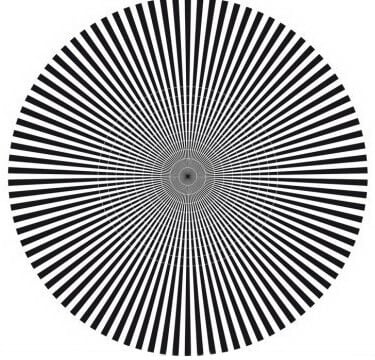
in dry eye syndrome, a variety of symptoms may be present depending on the severity of the condition:
- gritty, scratchy sensation
- irritation and tired eyes
- burning sensation
- itchiness
- tearing (watering) of the eyes
- pain
- blurred vision
- fluctuation in vision
- deterioration of symptoms with reading, computer work and towards the end of the day
A number of reasons can result in dry eye symptoms:
- smoking
- ageing
- systemic conditions such as menopause, Sjogrens syndrome, thyroid eye disease
- certain medications, e.g. antihistamines, certain antidepressants and blood pressure medication
- lid conditions, such as blepharitis and lagophthalmos
- looking at screens for prolonged periods of time
- warm dry environments
- contact lens wear [7]
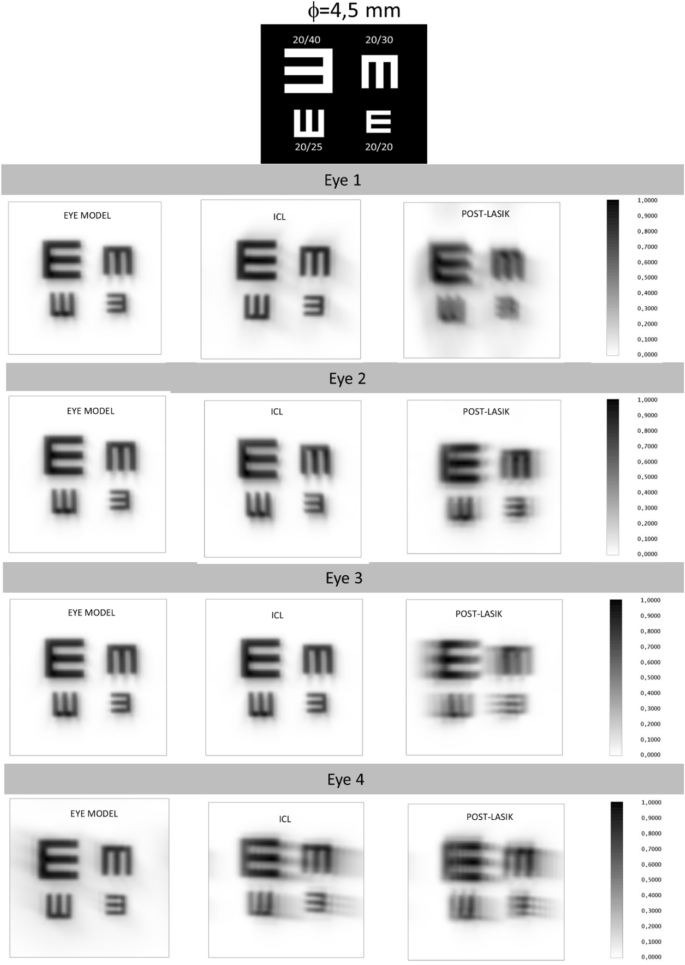
Refractive complications include unexpected refractive outcomes,
- irregular astigmatism,
- decentration,
- visual aberrations
- and loss of vision.
Infectious keratitis, dry eyes, and diffuse lamellar keratitis may also occur following LASIK.[8]
Astigmatism may be: [9]
- Congenital and acquired (caused by corneal diseases, scarring after diseases or surgeries, keratoconus, trauma);
- Corneal (98.6% of cases) and lenticular (very rarely, 1.4% of cases);
- Direct (the vertical meridian has the greatest refracting power) and inverse (the horizontal meridian has the greatest refracting power).





Reference:
- vsp.com
- medicalnewstoday.com
- optometristri.com/astigmatism
- aoa.org
- visioncenter.org/blog/astigmatism-lights
- [The effect of artificial tears on corneal surface regularity in dry eye] - PubMed (nih.gov)
- laservisioneyecentre.co.uk/eye-conditions/dry-eye-disease
- LASIK complications: etiology, management, and prevention - PubMed (nih.gov)
- eximer.ua/en/what-do-we-treat/astigmatism
- nature.com/articles/s41598-022-23662-3
 وبلاگ تخصصی عینک شامل مجموعه مطالب پزشکی است که اطلاعات مفیدی در رابطه با عینک , چشم، لنز، سلامتی چشم و راه های پیشگیری از بیماریهای چشمی، کنترل و درمان آن را در اختیار شما کاربر محترم می گزارد.
