What are learning disabilities?
Learning disability is a general term that describes specific kinds of learning problems. A learning disability can cause a person to have trouble learning and using certain skills. The skills most often affected are: reading, writing, listening, speaking, reasoning, and doing math.
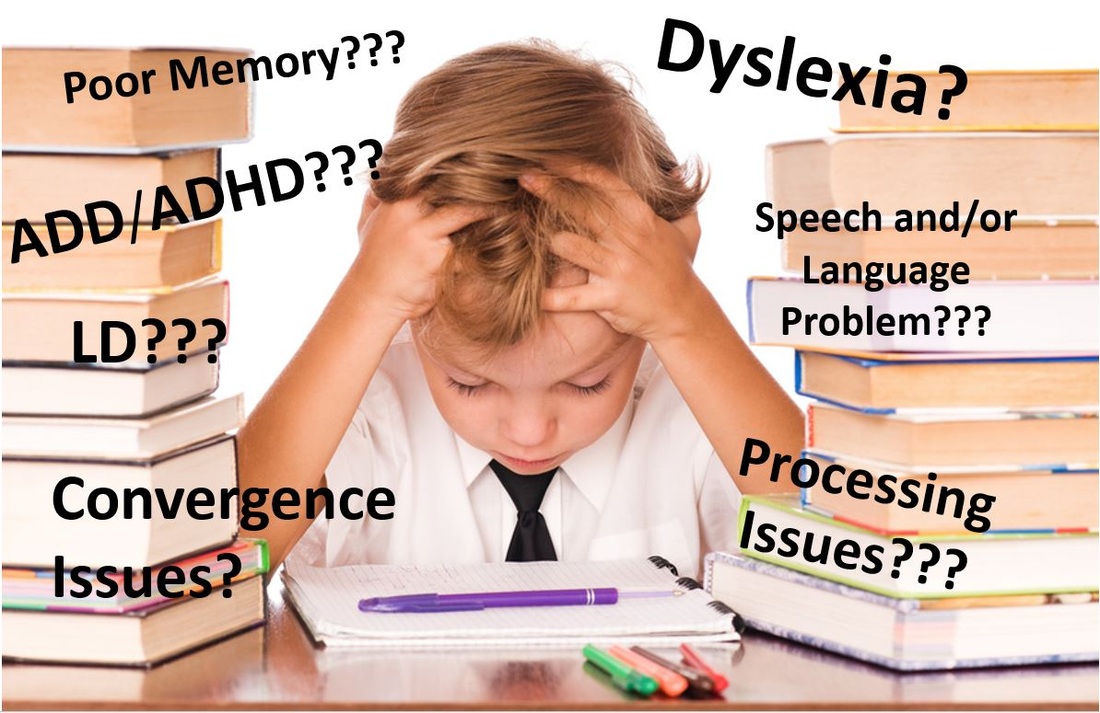
5 Most Common Learning Disabilities
School requires hard work in order to be successful. However, for some students, even hard work may not be enough. Some students are faced with additional challenges in the classroom due to learning disabilities. A learning disability is a disorder that inhibits the ability to process and retain information. Because there are numerous mental processes that affect learning, learning disabilities can vary dramatically. Here are five of the most common learning disabilities in classrooms today.
- Dyslexia
- ADHD(Attention Deficit/Hyperactivity Disorder)
- Dyscalculia
- Dysgraphia
- Processing Deficits
Learning disabilities are also connected to processing deficits. When students have a processing deficit, they have trouble making sense of sensory data. This makes it hard for students to perform in a traditional classroom without instructional supports. These deficits are most often auditory or visual, and they can make it hard for students to distinguish and remember important information that is needed to succeed.
These five learning disabilities can manifest with varying degrees of severity, and some students may struggle with more than one. By understanding these disabilities, it is possible to find workable solutions so that every student can succeed in the classroom.
Learning disabilities (LD) vary from person to person. One person with learning disabilities may not have the same kind of learning problems as another person with learning disabilities. One person may have trouble with reading and writing. Another person with learning disabilities may have problems with understanding math. Still another person may have trouble in each of these areas, as well as with understanding what people are saying.

Researchers think that learning disabilities are caused by differences in how a person's brain works and how it processes information. Children with learning disabilities are not "dumb" or "lazy." In fact, they usually have average or above average intelligence. Their brains just process information differently.
Examples of signs and symptoms associated with eye problems in people with learning disabilities
- Eye poking or rubbing
- Persistently red eyes
- Discomfort with bright lights
- Anxiety in unfamiliar situations
- Hesitancy in poorly lit environments, especially on steps or at pavement edges
- Unwillingness to venture out of their immediate environment or be involved
- Depression, anger or frustration
- Reduction in social or domestic skills and participation
- Loss of interest in family, friends, TV or social activities
- Undue alarm at unfamiliar noises or when approached
- Bumping into furniture or accidentally knocking over cups

Types of Learning Disabilities
- Attention Deficit/Hyperactivity Disorder (ADHD)
- Auditory Processing Disorder (APD)
- Visual Perceptual/Visual Motor Deficit
- Non-Verbal Learning Disabilities
- Language Processing Disorder
- Executive Functioning
- Dyscalculia
- Dysgraphia
- Dyslexia
- Dyspraxia
- Memory
When people think of eyesight, they usually think about accuracy, as in 20/20 vision. But vision is much more than that. The brain, not the eyes, processes the visual world, including things like symbols, pictures and distances. Weaknesses in these brain functions are called visual processing disorder or visual processing issues.
While there are ways to help kids compensate for those weaknesses, visual processing issues present lifelong challenges. They are not considered a learning disability. But they’re fairly common in kids who have learning issues.
Visual processing issues don’t just affect how a child learns. They also impact his ability to do ordinary thinks like sorting socks or playing a simple game of kickball. Visual processing issues can cause problems with socializing and self-esteem, too. Some kids may become frustrated and withdrawn.
Types of visual processing disorders
- Eye-tracking difficulties: When you read, the left-to-right movement of your eyes is called a saccade. This is one of the most complicated muscle movement the body makes, and eye tracking problems occur when one or both eyes have a problem moving smoothly or in synch in this side-to-side motion. When an eye tracking issue occurs while reading, the eyes often jump back and forward, moving sometimes two or three times as much as necessary.
- Convergence Issues: Convergence describes a condition when the eyes focus either in front or beyond an object. This is not a problem with the physical eye but a neurological problem. An eye chart test does not screen for this effectively. In short periods of time, the eye and brain can adjust for this and recognize shapes of letters. This allows a patient to pass the test.
- Strabismus: Strabismus is a condition often described as wandering eye. It results from imbalances in the muscles that control eye movement. Over time, a child with strabismus will develop neurological vision issues that severely affect depth perception. Sometimes the strabismus is intermittent, meaning it comes and goes. It’s easy to think you were seeing things or the child is just tired and that is why the eye turned in temporarily. Strabismus is not transitory. It is a medical condition that needs treatment.
- Double vision: Double vision is an indicator of many possible issues. It can indicate convergence issues and strabismus as well as physiological issues.

Eight Types of Visual Processing Issues
Visual processing issues are complex. That’s because there are eight different types, and people can have more than one. These issues often go undetected because they don’t show up on vision tests. Here are the different types of visual processing issues scientists have identified:
- Visual discrimination issues: Kids with this type have difficulty seeing the difference between two similar letters, shapes or objects. So they may mix up letters, confusing d and b, or p and q.
- Visual figure-ground discrimination issues: Kids with this type may not be able to pull out a shape or character from its background. They may have trouble finding a specific piece of information on a page.
- Visual sequencing issues: Kids with these issues have difficulty telling the order of symbols, words or images. They may struggle to write answers on a separate sheet or skip lines when reading. They also may reverse or misread letters, numbers and words.
- Visual-motor processing issues: Kids with these issues have difficulty using feedback from the eyes to coordinate the movement of other parts of the body. Writing within the lines or margins can be tough. Kids also may bump into things and have trouble copying from a book.
- Long- or short-term visual memory issues: Kids with either type have difficulty recalling what they’ve seen. Because of that they may struggle with reading and spelling. They may also have trouble remembering what they’ve read and using a calculator or keyboard.
- Visual-spatial issues: Kids with these issues have difficulty telling where objects are in space. That includes how far things are from them and from each other. It also includes objects and characters described on paper or in a spoken narrative. Kids may also have a tough time reading maps and judging time.
- Visual closure issues: Kids with these issues have difficulty identifying an object when only parts are visible. They may not recognize a truck if it’s missing wheels. Or a person in a drawing that is missing a facial feature. Kids may also have great difficulty with spelling because they can’t recognize a word if a letter is missing.
- Letter and symbol reversal issues: Kids with these issues switch letters or numbers when writing. Or make letter substitutions when reading after age 7. They also have trouble with letter formation that affects reading, writing and math skills.

Patients with learning disabilities can have the same range of visual problems as the general population. It has been estimated that people with learning disabilities are ten times more likely to have specific ocular conditions, including:
- amblyopia
- blepharitis – common in people with Down’s syndrome
- cataract
- concomitant strabismus
- cortical visual impairment
- entropion – common in people with Down’s syndrome
- field defects
- high refractive error – especially myopia and astigmatism
- impaired accommodation
- keratoconus
- nystagmus
- reduced vision.
The major causes of learning disability in the UK are:
- unknown aetiology
- prematurity
- chromosomal disorders
- Down’s syndrome
- Fragile-X syndrome
- cerebral palsy
- genetic disorders
- metabolic disorders
- iatrogenic disorders.
Reference:
- rcgp.org.uk
- medicinenet.com
- ldaamerica.org
- specialmomadvocate.com
- masters-in-special-education.com
- guidance.college-optometrists.org
 وبلاگ تخصصی عینک شامل مجموعه مطالب پزشکی است که اطلاعات مفیدی در رابطه با عینک , چشم، لنز، سلامتی چشم و راه های پیشگیری از بیماریهای چشمی، کنترل و درمان آن را در اختیار شما کاربر محترم می گزارد.
