Amblyopia, also known as lazy eye, is a disorder of the visual system that is characterized by a vision deficiency in an eye that is otherwise physically normal, or out of proportion to associated structural abnormalities of the eye. It has been estimated to affect 1–5% of the population.
Amblyopia means that visual stimulation either fails to transmit or is poorly transmitted through the optic nerve to the brain for a continuous period of time. It can also occur when the brain "turns off" the visual processing of one eye, to prevent double-vision, for example in strabismus (crossed-eyes).
It often occurs during early childhood, resulting in poor or blurry vision. Amblyopia normally affects only one eye in most patients. However, it is possible, though rare, to be amblyopic in both eyes, if both fail to receive clear visual images.

Detecting the condition in early childhood increases the chance of successful treatment, especially if detected before the age of five.
Early diagnosis increases the chance for a complete recovery. This is one reason the American Optometric Association recommends that children have a comprehensive optometric examination by 6 months of age and again at age 3.
The earlier it is detected, and the underlying cause corrected with spectacles and/or surgery, the more successful the treatment in equalizing vision between the two eyes.
The colloquialism "lazy eye" is frequently used to refer to amblyopia. The term "lazy eye" is imprecise because it is a layman's term for strabismus, particularly exotropia.[1]
Amblyopia or "lazy eye" is a condition in which the eye and brain are not working together as they should.
From birth until about 6 years of age, vital connections are formed between a child's eyes and brain. Anything that blocks or blurs vision in one or both eyes may then inhibit or block the development of these connections. This can cause the brain to not fully recognize the images seen by one or both eyes.
When this happens, the brain begins to ignore or suppress the images seen by the otherwise healthy eye, and the eye becomes weaker, losing vision strength (acuity). This eye is then referred to as "amblyopic."
Causes
The most common cause of amblyopia is strabismus, or wandering of one or both eyes either inward (called esotropia), outward (called exotropia), up (hypertropia), or down (hypotropia).
When eyes are misaligned, the straight or straighter eye becomes dominant. The vision strength (acuity) of the straight eye remains normal because the eye and its connection to the brain are functioning normally. The misaligned or weaker eye, however, does not focus properly and the brain suppresses or ignores its signal, eventually leading to amblyopia.

Not all kids with amblyopia will have crossed or wandering eyes — in fact many have eyes that are properly aligned. If so, amblyopia is usually the result of an anatomical or structural abnormality that interferes with or blocks vision, such as a droopy eyelid or a cataract.
Amblyopia aetiology factors can interrelate. High refractive error can contribute to strabismus through accommodative‐convergence synkinesis, for example, accommodative esotropia secondary to high hyperopia can in turn result in amblyopia. Sensory deprivation can drive strabismus and can also influence emmetropisation and drive anisometropic refractive error. Amblyopia itself may lead to failure to emmetropise and cause anisometropia, which may lead to sensory strabismus.
Another cause of amblyopia is severe far-sightedness (hyperopia), near-sightedness (myopia), or astigmatism (a form of blurry vision). These vision problems ("refractive errors") cause vision to be blurry, and it's these blurry images that are sent to the brain. Over time, the brain begins to ignore or suppress these unclear images, resulting in amblyopia in one or both eyes.
Another cause could be having different vision strengths in each eye — a condition known as anisometropia. When one eye sees more clearly than the other, the brain can ignore or suppress the vision of the blurry eye.
Genetics play a role as well. Amblyopia tends to run in families. It's also more common in children born prematurely or those affected by developmental delays. eResearch by Navid Ajamin -- summer 2012
There are several different types and causes of amblyopia:

Strabismic amblyopia, deprivation amblyopia, and refractive amblyopia
The end result of all forms of amblyopia is reduced vision in the affected eye(s).[2]
Signs & Symptoms
Most children with amblyopia won't complain of vision problems. Over time, they become accustomed to having good vision in one eye and poor vision in the other.
It's usually a parent or teacher who notices that a child is struggling with a vision problem — whether it's noticing crossed eyes, frequent squinting, or tilting the head to see better. Some kids will demonstrate poor depth perception (stereopsis) and difficulty seeing in 3D.
Treatment
Treatment for amblyopia involves forcing the brain to pay attention to the images of the amblyopic or weaker eye so that vision in that eye gets stronger. This is done through glasses, eye patches or drops, surgery, or a combination of these treatments:
- Glasses. Glasses are prescribed when amblyopia is caused by severe refractive errors and/or anisometropia (when one eye sees more clearly than the other). Glasses help send clear, focused images to the brain, which will teach it to "switch on" the weaker eye. This allows the brain to use the eyes together and develop normal vision.
- Patches. In many cases, children affected by amblyopia must wear an opaque eye patch over their stronger or unaffected eye. The patch is worn for 2-6 hours a day while the child is awake for several months or years depending on the severity of the condition. There are two types of eye patches: the first type functions like a band-aid and is placed directly over the eye. The second type, designed specifically for kids who wear glasses, is a cloth patch that fits securely over one lens.
For parents, enforcing the use of an eye patch might seem challenging. But kids usually adapt well after an initial adjustment period, and the patch simply becomes part of their day. In the meantime, distraction with a new or exciting toy, a trip to the park, or just playing outside can help kids forget they're wearing an eye patch. - Atropine drops. Sometimes despite parents' best efforts, some kids just refuse to wear their eye patch. In these cases, atropine drops may be used as an alternative to patches. Just as a patch blocks the vision in the unaffected or straight eye, atropine drops will temporarily blur out the vision in the strong eye, forcing the brain to recognize the images seen by the weaker eye.
Eye Exams Essential for Toddlers & Preschoolers
Kids reach visual maturity by about 8 years old; after that, vision problems can be harder to treat. The earlier amblyopia is diagnosed and treated, the better the chances to restore vision and avoid permanent vision loss.
Sometimes there are no apparent signs of a vision problem, so it's important for kids to undergo yearly vision screenings. These exams should begin in the toddler and preschool years so that problems are caught before a child reaches visual maturity.
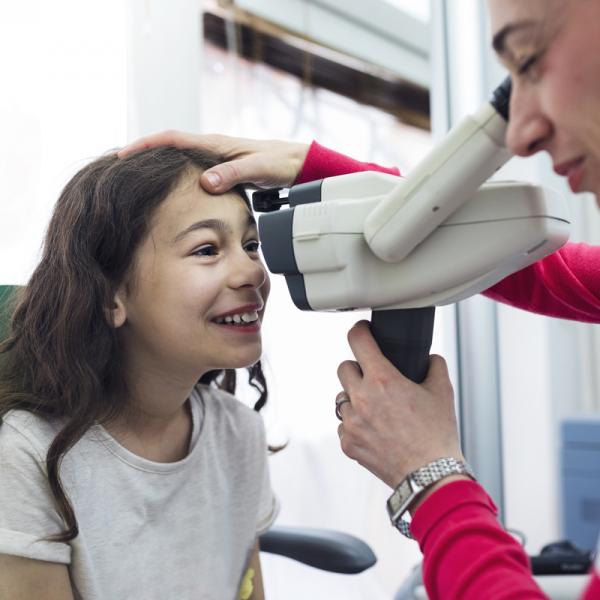
Most vision screening exams are done at the pediatrician's office or at school by the school nurse. If problems are found, your child will be referred to a pediatric ophthalmologist for further evaluation and treatment.
If your child is due for a vision screening, call your doctor to schedule one.[3]
Reference:
- en.wikipedia.org/wiki/Amblyopia
- aapos.org/terms/conditions/21
- kidshealth.org/parent/general/eyes/amblyopia.html
- aoa.org/patients-and-public/eye-and-vision-problems/glossary-of-eye-and-vision-conditions/amblyopia
See Also:
- (Lazy Eye)
- Types of Amblyopia
- New advances in amblyopia therapy
- A pragmatic approach to amblyopia diagnosis: evidence into practice
- Amblyopia prevention screening program in Northwest Iran (Ardabil)
 وبلاگ تخصصی عینک شامل مجموعه مطالب پزشکی است که اطلاعات مفیدی در رابطه با عینک , چشم، لنز، سلامتی چشم و راه های پیشگیری از بیماریهای چشمی، کنترل و درمان آن را در اختیار شما کاربر محترم می گزارد.
