The eye depends on the flow of tears to provide constant moisture and lubrication to maintain vision and comfort. Tears are a combination of water, for moisture; oils, for lubrication; mucus, for even spreading; and antibodies and special proteins, for resistance to infection. These components are secreted by special glands located around the eye. When there is an imbalance in this tear system, a person may experience dry eyes.

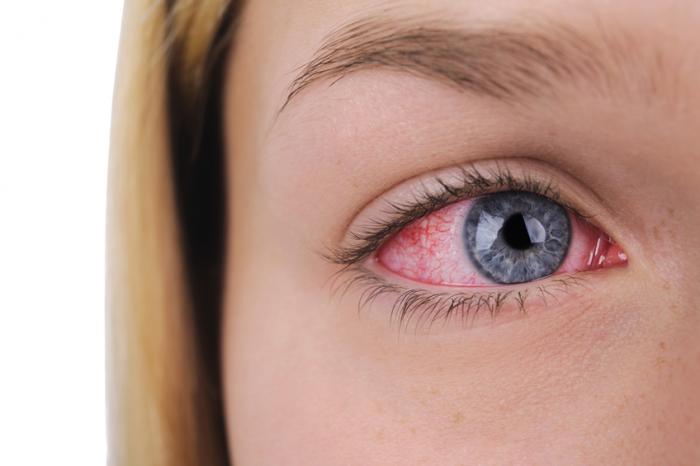
 When tears do not adequately lubricate the eye, a person may experience:
Pain
Light sensitivity
A gritty sensation
A feeling of a foreign body or sand in the eye
Itching
Redness
Blurring of vision
Sometimes, a person with a dry eye will have excess tears running down the cheeks, which may seem confusing. This happens when the eye isn't getting enough lubrication. The eye sends a distress signal through the nervous system for more lubrication. In response, the eye is flooded with tears to try to compensate for the underlying dryness. However, these tears are mostly water and do not have the lubricating qualities or the rich composition of normal tears. They will wash debris away, but they will not coat the eye surface properly.

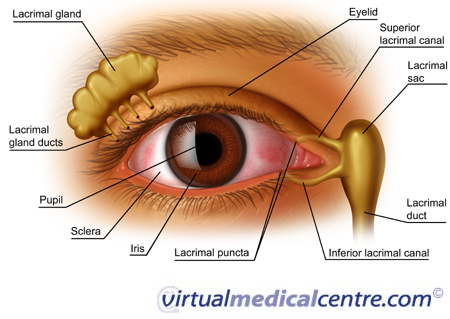
Anatomy of lacrimation, showing
a) Lacrimal gland
b) Superior lacrimal punctum
c) Superior lacrimal canal
d) Lacrimal sac
e) Inferior lacrimal punctum
f) Inferior lacrimal canal
g) Nasolacrimal canal
What Causes Dry Eyes? eResearch by Navid Ajamin -- summer 2011
In addition to an imbalance in the tear-flow system of the eye, dry eyes can be caused by situations that dry out the tear film. This can be due to dry air from air conditioning, heat, or other environmental conditions. Other conditions that may cause dry eyes are:
The natural aging process, especially menopause.
Side effects of certain medications such as antihistamines and birth control pills.
Diseases that affect the ability to make tears, such as Sjogren's syndrome, rheumatoid arthritis, and collagen vascular diseases.
Structural problems with the eye lids that don't allow them to close properly.
How Are Dry Eyes Treated?
Though dry eyes cannot be cured, there are a number of steps that can be taken to treat them. You should discuss treatment options with an ophthalmologist.

Treatments for dry eyes may include:
Artificial tear drops and ointments. The use of artificial teardrops is the primary treatment for dry eye. Artificial teardrops are available over the counter. No one drop works for everyone, so you might have to experiment to find the drop that works for you. If you have chronic dry eye, it is important to use the drops even when your eyes feel fine, to keep them lubricated. If your eyes dry out while you sleep, you can use a thicker lubricant, such as an ointment, at night.
Temporary punctal occlusion. Sometimes it is necessary to close the ducts that drain tears out of the eye. This is first done via a painless test where a plug that will dissolve over a few days is inserted into the tear drain of the lower eyelid to determine whether permanent plugs can provide an adequate supply of tears.
Permanent punctal occlusion. If temporary plugging of the tear drains works well, then silicone plugs (punctal occlusion) may be used. The plugs will hold tears around the eyes as long as they are in place. They can be removed. Rarely, the plugs may come out spontaneously or migrate down the tear drain. Many patients find that the plugs improve comfort and reduce the need for artificial tears.
Restasis. In 2002, the FDA approved the prescription eye drop Restasis for the treatment of chronic dry eye. It is currently the only prescription eye drop that helps your eyes increase their own tear production with continued use.
Other medications. Other medications, including topical steroids, may also be beneficial in some cases.
Surgery. If needed, the ducts that drain tears into the nose can be permanently closed to allow more tears to remain around the eye. This is done with local anesthetic on an outpatient basis. There are no limitations in activity after having this surgery.
Dry eyes can be diagnosed through a comprehensive eye examination. Testing, with emphasis on the evaluation of the quantity and quality of tears produced by the eyes, may include:
- Patient history to determine the patient's symptoms and to note any general health problems, medications or environmental factors that may be contributing to the dry eye problem.
- External examination of the eye, including lid structure and blink dynamics.
- Evaluation of the eyelids and cornea using bright light and magnification.
- Measurement of the quantity and quality of tears for any abnormalities. Special dyes may be put in the eyes to better observe tear flow and to highlight any changes to the outer surface of the eye caused by insufficient tears.
You can take the following steps to reduce symptoms of dry eyes:
- Remember to blink regularly when reading or staring at a computer screen for long periods of time.
- Increase the humidity in the air at work and at home.
- Wear sunglasses outdoors, particularly those with wraparound frames, to reduce exposure to drying winds and the sun.
- Nutritional supplements containing essential fatty acids may help decrease dry eye symptoms in some people. Ask your optometrist if taking dietary supplements could help your dry eye problems.
- Avoiding becoming dehydrated by drinking plenty of water (8 to 10 glasses) each day.
Related to:
- Dry eyes due to smoking and radiations
- Dry eyes due to hormone imbalance
- Dry eyes due to alcohol usage
- Dry eyes due to sun exposure
- Dry eyes due to lasik
- Dry eyes due to bell's palsy
- Dry eyes due to allergies
- Dry eyes due to sjogren's syndrome
- Dry eyes due to contacts
- Dry eyes due to low humidity
- Dry eyes due to dry air
- Dry eyes due to glacuma
- Dry eyes due to hypothyroidism
- Dry eyes due to lack of sleep
- Dry eyes due to dehydration
- Dry eyes due to thyroid
- Dry eyes due to inflammation
- Dry eyes due to sinus infection
- Dry eyes due to vitamin D deficiency
- Dry eyes due to computer , LCD/LED , Lamp , tablet , phoneset or any digital devices
- Dry eyes due to some medications, including antihistamines, nasal decongestants, birth control pills, and antidepressants
Reference: webmd.com wikipedia.org aoa.org/patients-and-public/eye-and-vision-problem
See Also:
- Getting Relief From Dry Eyes -- american optometric association
- Why It’s Important to Treat Dry Eyes -- bettermedicine.com
 وبلاگ تخصصی عینک شامل مجموعه مطالب پزشکی است که اطلاعات مفیدی در رابطه با عینک , چشم، لنز، سلامتی چشم و راه های پیشگیری از بیماریهای چشمی، کنترل و درمان آن را در اختیار شما کاربر محترم می گزارد.
